


Last Updated: November 5, 2026
Quick Summary
Choose small calming gifts that fit inside a standard pencil case, stay light, make no noise and have no loose parts. Build a three-tier kit with a pocket item, a pencil case item and a keepsake, and choose each object together with your child so they actually use it.
- A pencil case is the most reliable size guide for a school bag gift.
- Check the school's policy on personal belongings and fidgets before buying.
- A complete kit is one comfort object, one busy-hands item and one reminder of home.
- Silent fidgets pass the school test; clicking, scented or novelty ones get confiscated.
- Let your child hold two or three options and agree together where the item lives.
Table of Contents
- Why a Small Calming Gift Belongs in the School Bag
- Back-to-School Gifts for Anxious Kids That Do Not Add Clutter
- Building a School Anxiety Comfort Kit in Three Tiers
- Calming Fidget Toys for School: What to Look For
- Comfort Objects, Worry Companions and Bravery Tokens
- Choosing a Calming Item Together With Your Child
- What These Gifts Can and Cannot Do
- Adding a Calming Item to Your School Bag Order
- Frequently Asked Questions
Why a Small Calming Gift Belongs in the School Bag
Small calming gifts tucked into a school bag give a child something familiar to hold during the wobbly moments of the school day.
The bag itself sets the rules. A gift that lives in the school bag has to be small, quiet, safe, and genuinely wanted by the child. Get those four things right and you have something useful.
Below, we walk through what fits, what schools tend to allow, and how to build a school anxiety comfort kit in three tiers, plus how to choose a calming item with your child rather than for them.
What Fits Inside a Pencil Case
A pencil case is the most reliable measuring stick for a school bag gift.
Weight matters as much as size. A heavy item drags the bag down and gets left at home by week two.
Watch out: anything with loose parts, small detachable pieces or strong scents tends to get confiscated or lost. If a piece can come off in a pocket, assume it will.
Checking School Rules Before You Buy
Schools vary, and many have a view on toys and personal items in class. Before you buy, check the school's policy on personal belongings, fidgets and jewellery. Some classrooms welcome a comfort item; others ask that it stay in the bag until break.
A quick email to the teacher is worth more than any gift guide. For the bigger picture of starting-school nerves, see our guide to school transition gifts for anxious children.
Back-to-School Gifts for Anxious Kids That Do Not Add Clutter
Small, purposeful gifts chosen with the child tend to work best. Clutter builds when gifts are bought in bulk or picked to look good rather than to be used.
A gift earns its place in the bag if it does one job well: it calms, it reassures, or it reminds the child of home. If it does none of those, it is decoration.
A rule of thumb for families:
- One comfort object the child has chosen
- One busy-hands item for the wobbly waiting moments
- One reassuring reminder of family or home
That is a complete kit, and it fits in a pencil case. If you want a ready-made shortlist of confidence-building options, our round-up of confidence gifts for children starting school covers the ones we rate.
Building a School Anxiety Comfort Kit in Three Tiers
A school anxiety comfort kit can be built in three tiers, from smallest to most precious, each with a different job across the school day.
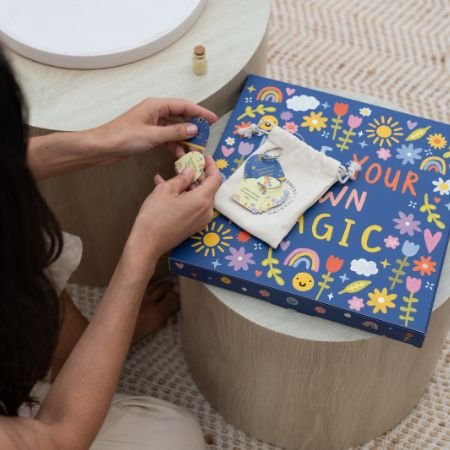
The Pocket Tier, the Pencil Case Tier and the Keepsake Tier
The pocket tier is the smallest: something flat and light the child can keep in a pocket or the front of the bag.
The pencil case tier lives with the pens and gets used during quiet moments.
The keepsake tier stays in the bag and comes out less often. A family photo, a matching bracelet or a personalised keychain reminds the child of home.
| Tier | What Goes In | Size Guide | Best For |
|---|---|---|---|
| Smooth stone, single card | Fits in a palm | Playground and corridor moments | |
| Pencil case | Small fidget, affirmation cards, mini pouch | Fits beside pens | Quiet classroom moments |
| Keepsake | Family photo, matching bracelet, keychain | Fits in a zip pocket | Reassurance of home |
Calming Fidget Toys for School: What to Look For
A useful size test is whether the item fits inside a standard pencil case and stays light enough to carry comfortably.
Here are the fidget types that tend to pass the school test, with the trade-offs to weigh up:
- Smooth stone or worry stone: palm-sized, silent, no loose parts, easy to wipe. Best for children who like texture rather than movement. Watch out: stones can be dropped and thrown, so agree it stays in the bag.
- Putty or modelling clay in a small tin: good for squeezing and stretching, quiet, and works well for children who need resistance. Watch out: it can dry out, mark sleeves or transfer to tables, so a small tin and a wipeable surface matter.
- Bendy pencil topper or pencil grip: attaches to a pen the child already has, so it adds no extra item to the bag. Best for children who fidget while writing. Watch out: some toppers are small enough to be a choking risk for younger children, so check the age on the packaging.
Things to avoid:
Kindness Crystals | Pass-It-On Stone Set →
- Clicks, rattles and screens: anything that makes noise or needs charging draws attention and gets confiscated.
- Loose parts and small detachable pieces: if a piece can come off in a pocket, assume it will, and assume it is a choking risk for younger children.
- Strong scents: scented putties and oils can bother classmates and trigger headaches.
- Novelty shapes: an elaborate fidget becomes a toy, and a toy becomes a distraction. The best fidgets are dull to look at and satisfying to hold.
Age suitability matters as much as design. For children under five, avoid anything small enough to swallow and check the recommended age on the packaging.
One fidget does not suit every child. Some need movement, some need texture, some need resistance and some dislike all three.
Comfort Objects, Worry Companions and Bravery Tokens
Comfort objects, worry companions and bravery tokens give a child a physical anchor for a feeling they cannot yet name.
Bravery tokens work slightly differently.
Most gift guides treat comfort objects as one category, but children differ in what they find comforting, and the differences matter for a school bag. Here is how to match the object to the child:
- Children who like texture: a smooth stone, a velvet pouch or a small fabric square. These are silent, light and easy to keep in a pocket. Watch out: some children dislike the feel of certain fabrics, so let them handle the item before it goes in the bag.
- Children who dislike texture: a card, a photo or a written note. These give reassurance without requiring touch, and they suit children who find sensory input overwhelming.
- Children who like scent: a small lavender bag or a scented pouch. Watch out: scent can bother classmates and staff, and some schools restrict strong smells, so check first and keep it sealed in a bag.
- Children who like movement: a small fidget or a bendy pencil topper rather than a static object.
Accessibility is part of choosing well. Children with visual impairments may prefer objects with distinct textures or sounds, though sound is usually a poor fit for a classroom.
Age suitability follows the same logic as fidgets. For children under five, avoid small parts and check the recommended age on the packaging.
A gratitude rock is one simple example of a small, pocket-sized object. For a child who likes the idea of passing kindness on, our pass-it-on stone set gives them three small crystals to keep, share or hide for someone else.


Choosing a Calming Item Together With Your Child
Choosing the item with your child is the step most parents skip, and it is the one that decides whether the gift gets used. A child who picked the stone will reach for it. A child who was handed a stone will leave it in the bag.
Try this approach:
- Name the moment. Ask when school feels wobbly: the bus, the playground, the quiet after lunch.
- Offer two or three options. Too many choices overwhelm; two or three keeps it simple.
- Let them hold each one. Children choose with their hands more than their eyes.
- Agree where it lives. Pocket, pencil case or zip pocket, decided together.
- Practise once at home. A dry run before the first day removes the novelty.
The goal is not the perfect object. It is the conversation, and the shared decision that makes the object mean something.
What These Gifts Can and Cannot Do
Small calming gifts can offer reassurance, prompt a breathing exercise, and give a child a sense of control over a big day.
A comfort object is a practical tool rather than a medical intervention. If your child's worries are affecting sleep, eating or attendance over weeks, speak to your GP or the school's wellbeing team (the NHS).
Used well, a calming item does something modest and useful: it gives a child a small, reliable way to steady themselves in a moment they cannot avoid.
Adding a Calming Item to Your School Bag Order
When you are ready to add a calming item to your school bag order, keep it small, quiet and chosen together. Our Box of Confidence affirmation cards give a child a short, encouraging message to read in a quiet moment, with 40 hand-drawn cards.

Sharing Kindness makes tools that aim to turn big feelings into conversations. Start with one item, let your child choose it, and watch what happens when they know it is in the bag.
Frequently Asked Questions
What small items can help a child feel calmer at school?
The most practical items are the ones a child can reach without leaving their seat: a smooth stone in a pocket, a small pouch of crystals, a set of affirmation cards, or a fidget that fits in a pencil case. Size matters more than novelty. Anything bulky can get left in the bag or confiscated, so choose items light enough that your child forgets they are there until they need them. Let your child handle the item before school starts so it feels familiar on the day.
What can I put in my child's school bag for anxiety?
A school anxiety comfort kit usually works best in three tiers: something in the pocket, something in the pencil case and something that stays in the bag. For the pocket, a smooth stone works well. For the pencil case, a small affirmation card or a quiet fidget. For the bag itself, a family photo or a matching bracelet. Keep the kit small. A child who has to dig through a full bag to find comfort will give up before they get there.
Are fidget toys allowed in primary school?
It varies by school and often by classroom teacher, so ask before you buy. Many primary schools allow quiet, non-distracting fidgets for children who need them, but disallow anything that lights up, makes noise, or becomes a plaything for the whole table. A good rule is to choose something silent, small and unremarkable. If your child has a genuine need, mention it to the teacher rather than sending the item in unannounced, and be prepared for the school to say no.
How can I make a small comfort kit for my child's school bag?
Start with your child rather than the shop. Ask what makes them feel steadier at home, whether that is holding something smooth, reading a familiar card or looking at a photo. Pick two or three items that fit those preferences and are small enough to stay in the bag unnoticed. Practise using them together for a week before school starts, and keep the kit in the same pocket every day so your child knows exactly where it is. Replace or rotate items if they stop being used.
The first day of school will always have some nerves in it, and that is normal. What you can change is whether your child walks in with something small and steady in their pocket. Get started with Sharing Kindness and give your child a calming item they picked themselves, backed by cards and stones designed to build confidence one small moment at a time.
