


Last Updated: November 5, 2026
Quick Summary
A kindness activity kit for children starting school should be small, printable and ready before term begins. Include a five-day kindness checklist, a feelings face chart, colouring sheets, kindness cards, crayons, stickers, bookmarks and a small notebook. Build it together in one afternoon and choose just two printable sheets for week one.
- A first-day kindness hand activity takes under ten minutes and needs no adult hovering.
- Pack three unnamed kindness cards for your child to give away on the first morning.
- Teach the three-question check: is everyone safe, has everyone agreed, would a teacher be happy to see this.
- Rehearse friendship words such as can I play with you three times before the first bell.
- Watch for small shifts like naming other children rather than keeping a kindness scoreboard.
Table of Contents
- What a Kindness Activity Kit Needs for the First Week
- Kindness Activities for the First Day of School
- Free Printable Kindness Activities for Children
- Acts of Kindness for Children at School That Stay Safe
- Helping Children Make Friends at School Through Small Gestures
- How to Tell If the Kit Is Working Without Turning It Into a Competition
- Building Your Kit Before the First Bell
- Frequently Asked Questions
What a Kindness Activity Kit Needs for the First Week
A kindness activity kit for children starting school works best when it is small, printable and ready before term begins. A few simple prompts, a feelings check-in and one shared activity can do more than a thick workbook.
Starting school is a big week for a small person. New faces, new routines, a new playground with rules nobody has explained yet. A kindness activity kit gives your child something concrete to hold onto. It is not about turning them into a mini saint. It is about giving them a way to join in, ask someone to play and notice other people's feelings when everything around them feels unfamiliar.
That is the whole editorial thesis here: the best kit is not the biggest one. It is the one that fits in a school bag and actually gets used.
The materials list: what to print, buy and make
Keep it lean. A workable first-week kit contains:
- Printed sheets: a five-day kindness checklist, a feelings face chart, two colouring sheets and a set of small kindness cards
- A pack of crayons or coloured pencils your child chooses themselves
- Stickers for marking completed acts, not for rewards
- Bookmarks to colour and give away
- A small notebook for drawing kind moments
- Seed packets or a paper bracelet as a make-and-give activity
Make the rest. A decorated shoebox becomes the kit box. Scrap paper becomes cards. The point is participation, not perfection.
Adapting the kit for ages 4 to 12
| Age | Kit focus | What to include |
|---|---|---|
| 4-5 | Feelings and sharing | Face chart, turn-taking cards, colouring sheets |
| 6-7 | Friendship and helping | Five-day checklist, bookmarks, sticker chart |
| 8-9 | Inclusion and noticing | Kindness cards, scenario prompts, notebook |
| 10-12 | Independence and reflection | Journal prompts, challenge list, giving projects |
Younger children need pictures and adult modelling. Older children need ownership. A ten-year-old who feels talked down to will roll their eyes, so let them choose which prompts go in the box. If you want a deeper look at how printable kits work as a daily practice, our guide to printable kindness kits walks through the rhythm week by week.
Kindness Activities for the First Day of School
The best first-day kindness activity takes under ten minutes and needs no adult hovering. Try a "kindness hand": your child draws around their hand and writes one kind thing they could do with it on each finger, such as waving hello, sharing a crayon or helping someone up. Keep the finished hand in their school bag as a visual reminder for the week.
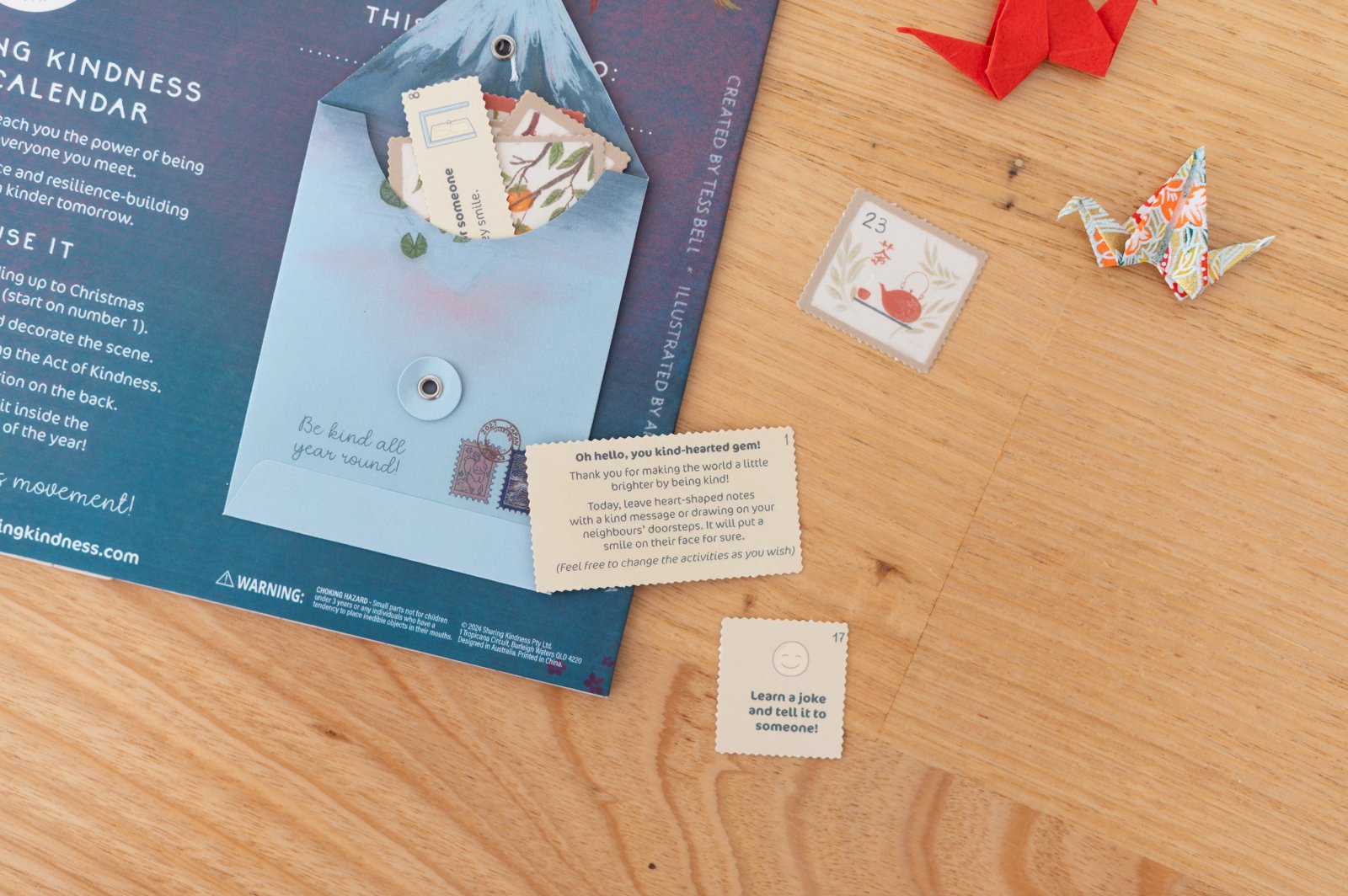
A first day works better when the kindness is planned around the moments that cause nerves: the doorway, the cloakroom, the playground and the lunch table. The plan below covers the first week, with one short activity per day that a parent can prepare the night before and a teacher can run in a five-minute circle.
| Day | Activity | What you need | Adult role |
|---|---|---|---|
| Monday | Kindness hand drawing | Paper, crayons | Model one example, then step back |
| Tuesday | Three kindness cards | Printed cards, pens | Help write names only if asked |
| Wednesday | Greeting practice | None | Rehearse one greeting three times |
| Thursday | Helping job | None | Agree the job the night before |
| Friday | Book and feelings chat | A starting-school picture book | Ask one feeling question |
On the first morning, pack three kindness cards for your child to give away, with no names attached. Practise one greeting they feel comfortable using, whether that is "hello", a wave or a nod, and agree a helping job for the day such as holding a door or handing out pencils. Read a book about starting school the night before and name how the character felt, which gives your child words for their own nerves. For more ideas, see these books and activities to teach kids empathy.
Some teachers use a simple morning circle where each child says one kind thing they could do that day. It takes only a few minutes and can help settle a room.
Watch out: a first-day activity that asks a shy child to speak in front of the whole class can raise anxiety rather than lower it. Offer a non-verbal option, such as holding up a card or drawing, and let the child choose.
Some families walk the route to the classroom door before term starts and name the kind acts they might see, which can make kindness easier to recognise on the day.
Free Printable Kindness Activities for Children
Free printable kindness activities for children should be genuinely free and genuinely printable: one page, clear type, no login wall. We keep our printables simple on purpose, because a sheet that needs explaining defeats the point.
Our Kindness Bucket List Kit is a printable list children can tick off, and it can be framed, laminated or kept in a school folder. Our 30-day kindness challenge is another printable option that offers a daily prompt.

What most guides miss is that printables fail when there are too many. Choose two sheets for week one. Add more only when your child asks.
Acts of Kindness for Children at School That Stay Safe
Safe kindness has boundaries, and children need those boundaries spelled out before they start. A kind act should never involve leaving the school grounds, going somewhere private with an adult, keeping a secret from a trusted grown-up, or touching someone who has said no.
Teach the three-question check:
Kindness Bucket List Kit [PRINTABLE] →
- Is everyone safe?
- Has everyone agreed?
- Would I be happy for a teacher to see this?
If any answer is no, it is not a kindness. That framing gives children a tool rather than a list of banned behaviours, and it protects them in situations we cannot predict. Role play helps children rehearse saying no and asking for help, and our empathy role play scenarios give you ready-made situations to practise at home before term starts.
Watch out: a child who is told to "be kind to everyone" without boundaries can end up tolerating unkind behaviour from others. Pair every kindness lesson with a reminder that they are allowed to say stop. That reminder can sit alongside books about kindness, helping children see that compassion and clear boundaries belong together.
Helping Children Make Friends at School Through Small Gestures
Friendship usually starts smaller than adults expect. Asking someone to play, remembering a name, saving a seat, sharing a snack, or saying "I liked your drawing" does more in week one than any grand gesture.
Children who struggle socially often freeze at the asking. Practise the exact words at home: "Can I play with you?" or "Do you want to draw with me?" Rehearse it three times so it comes out easily.
Age changes what works. With children aged four to five, model the gesture yourself in pretend play and keep the script to one short sentence. With six to seven year olds, practise a two-step script: ask, then wait for an answer.
Inclusion means making room for the child who needs a minute, not only the child who is ready to join in.
Cultural context matters too. Some families teach children to wait to be invited rather than to ask, so rehearse both asking and inviting. Some children are used to playing in mixed-age groups at home and may need help adjusting to same-age classmates.
Watch out: a child who is told to "be kind to everyone" without boundaries can end up tolerating unkind behaviour from others.
How to Tell If the Kit Is Working Without Turning It Into a Competition
Kindness is not a scoreboard. If you turn it into a race, children learn to perform kindness for ticks rather than to notice other people. Watch for the small shifts instead: your child mentions another child by name, tells you something they helped with, or asks how someone else felt.
A simple weekly check-in works better than any chart:
| What to look for | What it suggests |
|---|---|
| Names other children | Building connections |
| Describes others' feelings | Growing empathy |
| Uses kind words unprompted | Habit forming |
| Asks to do an activity again | Genuine engagement |
Keep the tracking private. A child who wants to keep going is the only measure that matters. If you would like a structured way to keep the habit going after week one, our 30-day kindness challenge offers a daily prompt without any competitive element.

Building Your Kit Before the First Bell
Build the kit in one afternoon, not over a month. Print the sheets, let your child choose the crayons, decorate the box and pack it together. That shared hour is itself the first kindness activity.
Starting with a few items, rather than a long list, is a sensible approach. A kit that gets used matters more than one that looks impressive. The Box of Confidence affirmation cards are designed to help children learn to be kind to themselves and others, and the Positive Mindset Game is a family card game that encourages conversation through stories.

School starting is nerve-wracking for children and parents alike. A small kit will not fix every worry, but it gives your child something to do with their hands and their heart in a week that feels enormous.
Frequently Asked Questions
What should go in a kindness activity kit for children starting school?
A workable kit covers four things: something to do (a printable checklist or bucket list), something to talk about (affirmation or question cards), something to give (bookmarks, stickers or cards to hand out), and something to track progress with. Add crayons, a folder to keep finished sheets in, and a short note for the teacher if the child wants to share what they made. Keep it small enough to fit in a school bag so it travels between home and the classroom.
Are there free printable kindness activities for children starting school?
Yes. Free colouring sheets, kindness checklists and printable bookmarks are widely available, and they work well for the first week because they need no preparation beyond a printer. If you want something structured, the Sharing Kindness Kindness Bucket List Kit is a digital download.
How do I help a shy child make friends in the first weeks of school?
Give them one concrete, low-risk action rather than a general instruction to make friends. Asking someone to play, saving a seat, or handing a child a bookmark with a smile are all small enough to attempt without much courage. Practise the exact words at home beforehand, then ask at pick-up which one they tried. Children who have a script rarely freeze, and the gesture gives the other child an easy way to respond.
How can teachers encourage kindness in a new class without making it competitive?
Avoid leaderboards and prize charts, which turn kindness into a performance. Instead, use a shared class goal, such as filling one poster with kind acts by Friday, and let children add to it anonymously. Notice kind behaviour out loud without ranking it, and keep the language specific: say what the child did, not how good they are. A five-day programme with one short activity per day gives the class a routine without turning it into a contest.
If you want your child to walk through the school gate with a few kind habits already in place, start with something small this week. Sharing Kindness makes printable kindness kits, affirmation cards for children aged 4 to 12, and a family game built around stories, gratitude and feelings. Get started with Sharing Kindness and give your child a first week that feels a little steadier.
