


Last Updated: November 6, 2026
Quick Summary
Gratitude gifts for children to take to school are small, meaningful tokens a child can hand to a teacher, classmate or staff member to say thank you, and they work best when the gift carries a message rather than a price tag. Check the school's gift policy, allergy risks and whether the item is safe to carry before anything goes into a school bag.
- A gift a child has chosen, made or written on gives them a role in the giving.
- Confirm with the teacher before buying anything in bulk, as rules and allergies vary.
- Short thank-you notes work best when specific and under four sentences.
- Set a per-child budget before you shop, and count support staff on your list.
- Ages 10 to 11 can plan the list, set the budget with you and deliver the gifts.
Table of Contents
- Why Gratitude Gifts Work Better Than Plastic Tat
- What to Check Before Your Child Takes a Gift to School
- DIY Teacher Appreciation Gifts Children Can Make
- Short Thank-You Notes for Teachers from Students
- Gratitude Activities for Children at School
- Budget-Friendly Gifts for Classmates, Teachers and School Staff
- Picking the Right Gift for Your Child's Age and Independence
- Ordering Your Gratitude Gifts from Sharing Kindness
- Frequently Asked Questions
Why Gratitude Gifts Work Better Than Plastic Tat
Gratitude gifts for children to take to school are small, meaningful tokens a child can hand to a teacher, classmate or staff member to say thank you, and they work best when the gift carries a message rather than a price tag.
Gratitude gifts are objects or notes given to express thanks, and the best ones for school are small, personal and easy to carry. The difference comes down to what the child puts into it.
What to Check Before Your Child Takes a Gift to School
Check three things before anything goes into a school bag: the school's gift policy, allergy risks and whether the item is safe to carry. Schools often have rules about food, small items and what children can bring in, and a quick email to the class teacher saves a lot of awkwardness. Ask about anything edible, anything with nuts, and anything small enough to be a choking risk for younger children.
Allergies, Policies and Classroom-Safe Gifting
Food gifts are the biggest risk and the easiest to avoid. Many schools ask families not to send in homemade food or anything containing nuts, and some ban food gifts entirely. If you want to give something edible, check with the teacher first and keep the packaging sealed with ingredients listed.
Classroom-safe gifts share a few features:
- Nothing edible unless the school approves it
- No small loose parts for younger year groups
- No strong fragrances, which can bother sensitive children and staff
- Nothing that needs to be plugged in or stored
- A note attached so the recipient knows who it came from
Watch out: a gift that seems harmless at home can break a school rule or trigger an allergy in a classmate, so confirm with the teacher before you buy anything in bulk.
DIY Teacher Appreciation Gifts Children Can Make
DIY teacher appreciation gifts children can make are the ones teachers tend to keep, because the effort is visible. A hand-painted card, a decorated jar of pencils or a small framed drawing costs very little and takes an afternoon.
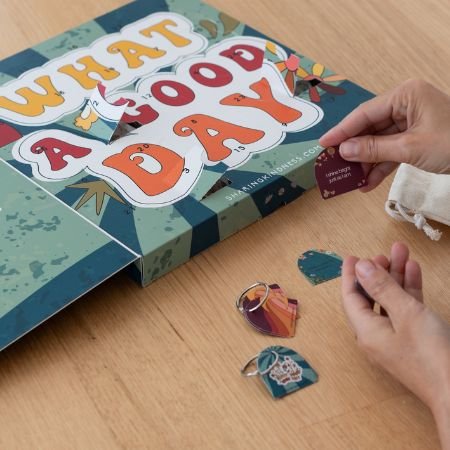
Simple Craft Projects for Ages 4 to 11
Each project below notes what you need, roughly how long it takes, how messy it gets and how much adult help is required. That way you can pick one that fits the child and the time you have, rather than starting something that ends in tears on a Sunday evening.
- Painted thank-you card. You need a folded card, poster paint or felt tips, and one clear message inside. About 20 minutes. Low mess. Ages 4 and up with help; ages 7 and up can do it alone.
- Decorated pencil pot. A clean jar or tin, wrapping paper, glue and pens. About 30 minutes plus drying time. Medium mess. Ages 6 and up, with an adult handling the glue gun if you use one.
- Hand-drawn bookmark. Card cut to size, coloured in, laminated if you can. About 15 minutes. Low mess. Ages 5 and up; laminating needs an adult.
- Kindness stone. A smooth stone, acrylic paint and a fine brush or pen. About 25 minutes plus drying. Medium mess. Ages 7 and up, since fine detail needs a steady hand.
- Class thank-you poster. A large sheet of paper, and every child adds a handprint or a sentence. About 40 minutes across the class. High mess. Works for any age with adult help.
If you want a deeper walkthrough of the stone idea, our guide to pass-it-on kindness stones for kids covers the craft and the message that goes with it.
What Children Can Make Themselves, and Where You Need to Step In
A common pattern is that parents end up doing most of the making, which defeats the point. Split the job by age so the child owns the part they can manage. Ages 4 to 6 can paint, stamp, stick and sign their name; you handle cutting, gluing and anything sharp.
Watch out: glitter, strong-smelling paints and anything with small loose parts can breach classroom rules or bother sensitive classmates, so check with the teacher before a whole class makes the same thing.
Time needed for each DIY teacher appreciation craft project
Short Thank-You Notes for Teachers from Students
Short thank-you notes for teachers from students work best when they are specific and under four sentences. A teacher who reads "thank you for helping me with my fractions, I finally get it" remembers that far longer than a generic card. Help your child name one moment, one thing the teacher did and one feeling.
A simple structure to fill in together:
- "Thank you for ______." Name one specific thing.
- "It helped me because ______." Say what changed.
- "I will remember ______." Add one detail.
- Sign with the child's name and the date.
For a child who freezes at a blank page, give them the sentence starters and let them fill the gaps. The imperfect spelling is part of the charm, and teachers notice the effort more than the grammar.
Gratitude Activities for Children at School
Gratitude activities for children at school turn a one-off gift into a habit. A daily or weekly prompt, a class gratitude jar or a kindness challenge gives children a routine for noticing what they appreciate.
Classroom Projects That Build a Gratitude Habit
The projects that stick are the ones with almost no setup. A jar and a stack of paper slips is enough to start. Children write one thing they are grateful for each day and drop it in, and the class reads a few aloud at the end of the week.
- Gratitude jar: one slip per child per day, read aloud on Fridays
- Kindness chain: a paper loop for every kind act, joined into a chain across the wall
- Thank-you wall: sticky notes naming someone who helped that week
- Class kindness challenge: one small act a day for a set period, ticked off together
For more ideas to run at home or in class, Sharing Kindness's kindness activities for kids gives teachers and parents a starting point that builds a gratitude habit over time.
Budget-Friendly Gifts for Classmates, Teachers and School Staff
Budget-friendly gratitude gifts work when you set a per-child figure before you shop, not after. A whole class plus teachers plus support staff adds up fast, and a clear budget keeps the giving about the message rather than the spend. Decide on a figure per child, multiply it out, and choose one gift type that fits everyone. Most families find a small homemade gift or a single low-cost token per classmate is enough; the message does the work, not the price.
Low-Cost Ideas with Clear Per-Child Budgets
The table below groups ideas by how they are made and who they suit, so you can plan a class-wide gift without overspending. Figures are deliberately left as relative bands rather than fixed prices, because costs vary by shop and season.
| Gift | Who it suits | How it is made | Relative cost per child |
|---|---|---|---|
| Gratitude Rock | Teachers, staff, older children | Bought as a small token | Low |
| Kindness Pin Badges | Classmates, school staff | Bought individually or as a pack | Low |
| Painted stone | Classmates, teachers | Made by the child | Very low |
| Handwritten note | Anyone | Made by the child | Free |
| Bookmark | Classmates | Made by the child | Very low |
Our Gratitude Rock gives a child something concrete to hold when they say thank you. For a class-wide gift, the Kindness Pin Badges come individually or as a pack, which makes a per-child budget simple to plan.


Bulk-Buying and Homemade Trade-Offs
Bought tokens are quicker and more uniform, which helps when a child has to hand out thirty of the same thing. Homemade gifts cost less and carry more of the child's effort, but they take time and can vary in quality.
Watch out: some schools ask that gifts are not distributed in class to avoid leaving anyone out, so confirm the policy before buying in bulk.
Picking the Right Gift for Your Child's Age and Independence
Match the gift to what your child can hand over and explain themselves. A four-year-old needs something you can help them give, while a ten-year-old can choose, wrap and deliver a gift alone. The goal is a child who owns the giving, not a parent who does it for them.
- Ages 4 to 6: you choose, the child paints or signs. Keep it to one item per recipient.
- Ages 7 to 9: the child picks from two or three options and writes the note.
- Ages 10 to 11: the child plans the list, sets the budget with you and delivers the gifts.
The Pass-It-On Stone Set suits this well because a child can keep one, give one and pass one on. It gives an older child a reason to decide who gets what, which is exactly the independence you want them to practise.

Ordering Your Gratitude Gifts from Sharing Kindness
Gratitude gifts only do their job when a child can hand them over with confidence, and that starts with choosing something simple enough to explain in one sentence. Sharing Kindness was founded in 2019 to raise kinder humans. Get started with Sharing Kindness and give your child a gift they can hand over with pride.
The hardest part is not buying the gift. It is helping a child find the words to go with it. Give them a small token and a sentence starter, and let them do the rest.
Frequently Asked Questions
What are thoughtful thank-you gifts children can take to school?
Thoughtful gratitude gifts for children to take to school are small, portable and personal. A handwritten thank-you note, a painted card, a decorated bookmark or a little kindness stone all work well. Choose something the child can carry in a school bag without it breaking or causing a distraction. Personalised messages and gift tags add meaning without adding cost. Check the school's gift policy first, and keep the item allergy-safe and free from anything a teacher would need to store or supervise.
What should children consider before taking gifts to school?
Check the school's policy on gifts and food allergies before anything goes in the school bag. Avoid edible gifts unless the school confirms it is safe. Keep the gift small, non-disruptive and clearly labelled with the child's name and the recipient's. For classmate gifts, aim for something inclusive that every child can receive, so no one feels left out. A clear per-child budget helps too, especially when a whole class is involved.
How can children make a DIY teacher appreciation gift at home?
Simple craft projects work best: a hand-painted card, a decorated jar, a bookmark or a framed drawing. Children aged 6 to 11 can usually manage these with minimal adult help. Provide paper, paint, crayons and card, then let the child write a short personalised message inside. The value comes from the effort, not the materials. Pair the handmade item with a short thank-you note and the gift feels complete without spending much at all.
What are simple gratitude activities for children at school?
Gratitude activities for children at school can be as simple as a daily gratitude circle, a kindness bucket list the class ticks off together, or a wall of thank-you notes for school staff. These activities help children learn to notice what they appreciate and express it. A 30-day kindness challenge also works well as a classroom project. Keep activities short, age-appropriate and inclusive so every child can take part without needing to buy anything.
