


Last Updated: November 6, 2026
Quick Summary
Affirmation cards can help anxious teens by interrupting a spiral long enough for them to reach for a coping skill they already know, but they cannot stop an anxiety attack or fix a worry that needs proper support. Used well, they give your teen a small tool they control while the bigger work happens elsewhere.
- Pair each card with a physical calming action, such as four slow breaths or pressing feet into the floor.
- Start with one believable card rather than the whole deck, and swap cards only after a week of use.
- Ask your teen to rewrite one word so the statement sounds like something they would say.
- Review after a week by asking whether the card was used and whether it helped even a little.
- If anxiety stops your teen going to school, eating, sleeping or seeing friends, speak to your GP.
Table of Contents
- Why Affirmation Cards Can Help Anxious Teens (and Where They Fall Short)
- Short Positive Affirmations for Anxiety That Teens Won't Roll Their Eyes At
- How to Use Affirmation Cards for Anxiety: A Step-by-Step Guide
- Anxiety Coping Statements for Teenagers: What to Say When Panic Builds
- Affirmation Cards for Anxious Teens Printable: Flexible, Low-Cost Options
- Letting Your Teen Personalise Their Cards (Without Taking Over)
- When Affirmation Cards Aren't Enough: Knowing When to Seek More Support
- Choosing Affirmation Cards for Your Teen
- Frequently Asked Questions
Why Affirmation Cards Can Help Anxious Teens (and Where They Fall Short)
Affirmation cards are small cards printed with short, positive statements that a teenager can read, say aloud or keep close during a difficult moment.
Here is the honest version. A card cannot stop an anxiety attack, and it will not fix a worry that needs proper support.
If you want more background on how this works for younger children, our positive affirmation cards for children guide explains the thinking in more depth.
Short Positive Affirmations for Anxiety That Teens Won't Roll Their Eyes At
The best short positive affirmations for anxiety are specific, plain and believable. "I am a radiant being of light" will get laughed out of the room. "This feeling will pass, like it did last time" will not.
Teens have a finely tuned rubbish detector. Anything that sounds like a fridge magnet gets dismissed, and once that happens you have lost the card for good. Aim for statements that name the feeling and offer a next step:
- "This is uncomfortable, not dangerous."
- "I have got through this before."
- "I can do the next small thing."
Notice that none of these promise the anxiety will vanish. They give your teen a coping statement they can say without feeling silly, which is the whole point.
How to Use Affirmation Cards for Anxiety: A Step-by-Step Guide
Using affirmation cards well takes about three minutes a day and works best when the cards are paired with a physical calming action rather than read in isolation. The steps below are the ones we would suggest to any family starting out, and they cover choosing, practising and reviewing cards so the habit has a chance to stick.
Step 1: Pick the Right Moment
Morning is the usual recommendation, but for anxious teens the better moment is often the calm stretch before bed, or the ten minutes after school when the day is still settling. Choose a time when your teen is not already wound up. Trying to introduce a new habit mid-panic rarely works. A common pattern is to attach the card to something that already happens every day, such as brushing teeth or getting into bed, so the reminder is built into the routine rather than added on top.
Step 2: Choose One Card, Not the Whole Deck
A deck of thirty cards is overwhelming on day one. Ask your teen to pick one card that feels believable and one that feels like a stretch, then start with the believable one. Once this small routine feels manageable, it can sit alongside other ways to manage teen anxiety, such as keeping conversations open and noticing what makes difficult moments easier.
Step 3: Read It Out Loud, Then Rewrite It
Reading aloud feels awkward at first. Do it anyway, then ask your teen to change one word so the statement sounds like something they would say. "I can handle this" might become "I can probably handle this." The edit matters more than the original wording, because it turns a card someone gave them into a sentence in their own voice.
Step 4: Pair It With a Calming Action
A card on its own is just words. Pair it with something physical: four slow breaths, pressing their feet into the floor, or holding something cold. This links the statement to a calming action, so the two become one habit. If you want help building that into a daily rhythm, our guide to incorporating kids affirmation cards into your child's daily routine walks through the practical side.
Step 5: Review After a Week
At the end of the first week, ask two questions: did the card get used, and did it help even a little? If it was never picked up, the wording or the timing is wrong, not the teen. If it was used but felt flat, change one word and try again.
Watch out: do not turn the review into a test. If your teen says the card is silly, believe them and change it rather than arguing that it worked last week.
Anxiety Coping Statements for Teenagers: What to Say When Panic Builds
Anxiety coping statements for teenagers work best when they are short enough to remember mid-panic and honest enough to believe. During a spike, the thinking brain goes quiet, so a long sentence will not land.
Here are statements that hold up under pressure:
- "My body is doing its job. It is just doing it too loudly."
- "I am safe. This will peak and then come down."
- "I do not need to fight this. I need to breathe through it."
- "One thing at a time. The next thing is all I need."
A common mistake is handing a teen a card mid-panic and expecting them to read it. In practice, they need the statement said to them first, out loud, by you.
Affirmation Cards for Anxious Teens Printable: Flexible, Low-Cost Options
Printable affirmation cards are a practical starting point because your teen can choose the wording, print a set that suits them and replace cards as their needs change.
Our printable Box of Confidence cards are designed to be printed at home or used on the go. A few things to think about with any printable set:

- Print on thicker paper so the cards survive a school bag.
- Let your teen cut and decorate them, because ownership drives use.
- Keep a small stack in a pencil case, a wallet or a bedside drawer.
- Reprint the ones that get worn out, which is a sign they are working.
Printables suit families who want to test the idea before buying a physical set, and they suit teens who want control over what the cards say.
Letting Your Teen Personalise Their Cards (Without Taking Over)
Personalisation is where affirmation cards either stick or get abandoned.
Your job is to supply the materials and then step back. If they want ideas, our guide to crafting printable affirmation cards with templates and inspiration has layouts and prompts they can borrow from.
A few techniques help teens adapt a statement so it feels believable:
- Add a qualifier. "I can cope" becomes "I can probably cope with this lesson." The hedge makes it easier to accept.
- Name the situation. "This feeling will pass" becomes "This feeling will pass, like it did before the maths test." Specific memories are more convincing than general promises.
- Turn it into a next step. "I am calm" becomes "I can do the next small thing, which is opening my book." Action statements are easier to act on than mood statements.
- Use their own words. If your teen says "I just need to get through the next ten minutes," that sentence belongs on a card, even if it is not how you would phrase it.
Watch out: the fastest way to kill the habit is to correct their card. If your teen writes something you think is pessimistic, leave it. A statement they believe beats a statement you prefer.
When Affirmation Cards Aren't Enough: Knowing When to Seek More Support
Affirmation cards are a self-help tool, not a treatment. If anxiety is stopping your teen going to school, eating, sleeping or seeing friends, cards are not the answer on their own and you should speak to your GP.
The same applies if your teen is withdrawing, if panic is happening often, or if they mention hopelessness. In the UK, you can also contact NHS 111 for advice, and charities such as YoungMinds offer guidance for parents who are not sure whether a behaviour is ordinary teenage worry or something more.
Cards sit alongside support, not instead of it. Used well, they give a teen a small tool they control while the bigger work happens elsewhere.
Choosing Affirmation Cards for Your Teen
Choose a set your teen will actually pick up: sturdy cards, wording that sounds like them, and a size that fits a pocket or a bedside table.
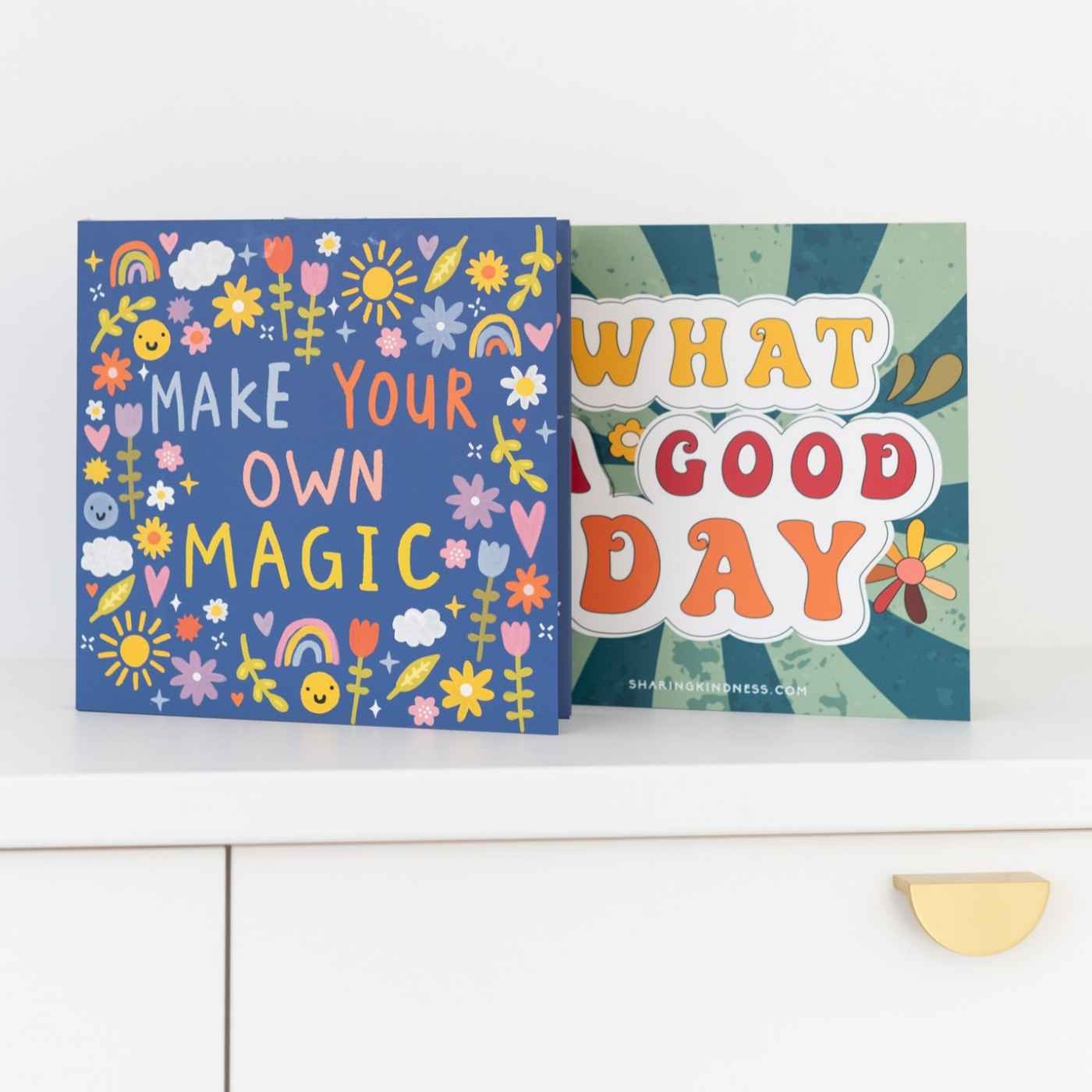
Our Box of Confidence affirmation cards are hand-drawn, with simple wording and four characters kids relate to. If your teen is at the older end of that range and finds the illustrations too young, the printable set gives you the same idea in a format they can adapt. For a broader look at what makes a good set, the NHS guide to anxiety in children and young people is a sensible starting point for understanding what you are supporting.

A quick way to compare your options:
| Option | Best for | Watch out for |
|---|---|---|
| Physical card set | Families who want something ready to use | Wording may not fit your teen exactly |
| Printable set | Teens who want to choose their own wording | Needs printing and cutting |
| Handmade cards | Teens who resist anything shop-bought | Takes more time to set up |
| Cards plus a daily routine | Building a habit over weeks | Needs consistency to work |
Whichever you pick, the routine matters more than the product. Three minutes a day beats an expensive set that gets opened once.
Anxious teens need small, repeatable tools, and a card set only helps if it becomes part of the day.
Frequently Asked Questions
What are some positive affirmations that can help anxious teens?
Keep them short, believable and specific to the moment. Examples include: 'This feeling will pass', 'I have got through hard things before', 'I can ask for help', and 'One small step is enough for now'. Avoid grand statements like 'I am fearless' if your teen does not believe them yet, because the brain tends to reject claims that feel untrue. The best affirmations for anxiety are the ones your teenager would actually say out loud without cringing, so let them edit the wording until it feels like their own.
How often should a teen use affirmation cards?
Little and often works better than a big session once a week. A realistic routine is one card in the morning and one before bed, plus pulling a card out when anxiety starts to build. Tying it to something that already happens, like breakfast or brushing teeth, makes it easier to remember. If your teen is sceptical, start with two or three times a week rather than daily. Consistency matters more than volume, and a card they actually use beats a full deck that stays in a drawer.
How can a teenager use affirmation cards when anxiety starts to build?
The trick is to use the card before anxiety peaks, not during a full panic. When your teen notices the early signs, such as a tight chest or racing thoughts, they can pull out a card, read it slowly, and pair it with a calming action like slow breathing or pressing their feet into the floor. Practising this when they are calm makes it easier to reach for the card when things get hard. It works best as one small tool within a wider coping plan, not as a replacement for other support.
How do I know if my teen needs more than affirmation cards?
Affirmation cards are a self-help tool, not a treatment. Consider seeking additional support if anxiety is interfering with school, sleep, friendships or eating, if it has lasted for weeks, or if your teen is avoiding things they used to enjoy. Speak to your GP, who can discuss options such as counselling or a referral. If your teen ever mentions self-harm or suicidal thoughts, seek urgent help straight away.
