


Last Updated: November 7, 2026
Quick Summary
The best confidence gifts for teens who dislike praise are low-key ones that support without announcing themselves, such as affirmation cards kept privately in a drawer, a printable set they choose themselves, or something tied to an interest rather than self-improvement. Give the gift casually with one sentence and no speech, then let it sit without asking whether they have used it.
- Public praise puts a spotlight on a teen still working out who they are, and being watched feels risky.
- Describe what you noticed instead of rating the person, and aim for one specific observation a week.
- Keep any card to about three lines, sign it, leave it somewhere private and do not ask about it afterwards.
- A lower-band gift given without ceremony lands better than an expensive one that arrives with a speech.
- Gift selection should follow personality rather than confidence level, so let your teen's interests make the final call.
Table of Contents
- Why Some Teens Find Praise Uncomfortable
- Confidence Gifts for Teens Who Dislike Praise
- How to Encourage a Teenager Without Praise
- What to Write in a Card for a Teenager
- Choosing Gifts by Personality and Confidence Needs
- How to Give the Gift Without Making It a Confidence Intervention
- Finding a Confidence Gift That Fits Your Teen
- Frequently Asked Questions
Why Some Teens Find Praise Uncomfortable
A teenager who flinches at "you're amazing" is not being difficult. Confidence gifts for teens who dislike praise only work once you understand why the praise stings in the first place.
The usual reason is pressure. Public praise puts a spotlight on a young person who is still working out who they are, and being watched feels risky at that age. Some teens also read praise as an expectation they now have to keep meeting.
Self-esteem plays a part too. A teenager with low self-esteem often discounts kind words because they do not match how they see themselves. Shame works the same way.
None of this means stop encouraging them. It means changing the delivery.
Confidence Gifts for Teens Who Dislike Praise
The best confidence gifts for teens who dislike praise are low-key ones. A small, thoughtful choice can show you know what matters to them, much as taking care with the details can make a care package feel personal.
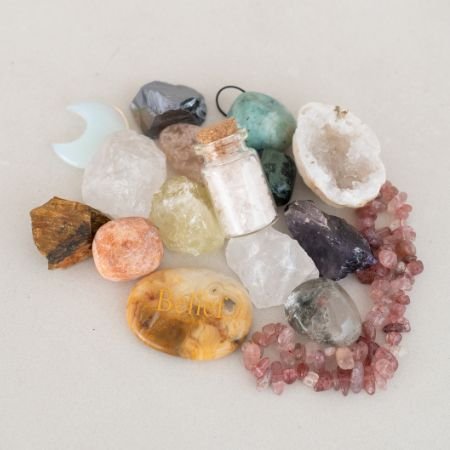
Here are the options we would actually recommend, based on what parents tell us works.
- Affirmation cards they can use privately. Our Box of Confidence holds 40 hand-drawn cards with simple words and illustrations, and because a teen can keep them in a drawer and read them alone, there is no audience and no pressure to react. The pack is designed for ages 4 to 12, so for an older teen it works best as a shared family tool or a gentle starting point rather than a solo gift. Budget band: lower.
- A printable set for a teen who likes control. The printable version of Box of Confidence lets them choose which cards to print and where to keep them. Choice matters here, because autonomy is part of what makes a gift feel safe. Budget band: lowest.
- A countdown calendar for an older teen. Our crystal calendars are made with teenage girls in mind, with 25 crystals and 25 mini affirmation cards behind each door. Opening one small thing a day is low-key by design. Budget band: middle. Check for choking risk with younger siblings in the house, as the calendar contains small objects.
- A game the whole family plays. The Positive Mindset Game builds confidence through stories rather than compliments, so nobody is singled out and the encouragement happens sideways. If you want more low-pressure options, our guide to small bravery gifts for nervous children covers ideas that suit a hesitant teen too. Budget band: middle.
- Something tied to an interest, not to self-improvement. A sketchbook, a camera strap, a decent water bottle for the sport they love. The message is "I see you", not "I am trying to fix you". Budget band: varies. Sensory note: let them choose the colour and texture where possible.
- An experience rather than an object. A ticket to a gig, a workshop in something they already love, or a day out with no audience and no speech. Experiences work well for teens who find objects loaded with meaning. Budget band: varies. Sensory note: check noise levels and crowd size if your teen is sensitive to either.
- A practical upgrade they have asked for. New headphones, a better backpack, a desk lamp that actually works. These say "I listen" without saying "I am trying to improve you". Budget band: varies. Sensory note: let them test the fit before you buy where possible.
For a broader list of ideas that avoid direct praise, our guide to confidence-building gifts for anxious teenagers goes deeper on matching a gift to a specific worry.

How to Encourage a Teenager Without Praise
Encouragement without praise means describing what you noticed instead of rating the person. "You got up early three days running to finish that" lands differently from "you're so dedicated". The first gives them information.
Try these swaps:
- Instead of "you're so clever", try "that was a tricky question and you kept going until you found the answer".
- Instead of "good job", try "you cleared the whole kitchen without being asked".
- Instead of "I'm so proud of you", try "I noticed how much effort went into that".
- Instead of commenting at all, ask a question: "What part of that did you enjoy most?"
Effort and process are safer ground than outcomes. A teen who is praised for results learns to fear failure. A teen who is noticed for effort learns that trying counts, which is the foundation of a growth mindset.
In practice, this means saying less and noticing more. One specific observation a week beats daily compliments. The Positive Mindset Game is a useful backup here, because it turns encouragement into something the family does together rather than something aimed at one person.
What to Write in a Card for a Teenager
What you write in a card for a teenager should be short, specific and free of ratings. Skip "you're the best daughter in the world" and write something they can read without needing to respond.
A structure that works well:
"I wanted you to know I noticed how you handled [specific situation]. It took [specific quality, e.g. patience] and I saw it. No need to say anything back. I just wanted you to have this."
Three lines is plenty. Sign it, leave it somewhere private, and do not ask about it afterwards. The card is the gift's quiet companion, not a test of how grateful they are.
If you want a bank of openers, try these:
- "I like the way you think about things. Here is something for your [hobby]."
- "You have had a big term. This is just for you, no occasion."
- "I saw this and thought of the way you [specific interest]. Enjoy it."
Avoid anything that sounds like a verdict on their character. Stick to what you saw, when you saw it, and why it mattered to you.
Choosing Gifts by Personality and Confidence Needs
Gift selection should follow personality, not confidence level. A shy teen and a loud one may both need a boost, but they will reject the same present for completely different reasons.
| Personality or need | Gift direction | What to avoid |
|---|---|---|
| Private and self-conscious | Affirmation cards kept in their room, a journal, a printable set they choose | Public reveals, group gifts |
| Cynical about self-help | Something tied to an interest, a family game, a practical item | Anything labelled "confidence" |
| Loves ritual and small treats | A countdown calendar, a daily crystal and card | One big gesture |
| Struggling with a specific worry | A gift plus a shared activity, plus a card with one specific observation | A gift that implies they need fixing |
| Sensory sensitivities | Soft textures, quiet objects, no strong scent | Scratchy fabrics, loud packaging |
| Sporty and active | Kit for their sport, a decent water bottle, a gym bag | Fragile objects, anything that needs careful handling |
| Creative and hands-on | A sketchbook, good pencils, a camera strap, a sewing kit | Kits that come with instructions and a right answer |
| Introverted and bookish | A book token, a reading light, a comfortable blanket | Surprise parties, group activities |
| Practical and organised | A planner, a desk organiser, a good pen | Decorative items with no function |
Age matters too. If you are comparing options for a younger sibling as well, our guide to confidence gifts for children starting school is a good companion piece.
Budget is part of the decision, not an afterthought. A lower-band gift given without ceremony will land better than an expensive one that arrives with a speech.
Accessibility matters as well. If your teen is neurodivergent, has a physical disability or finds change difficult, check the gift against their actual daily life before you buy.
How to Give the Gift Without Making It a Confidence Intervention
Hand it over casually. A gift that arrives with a speech feels like a project, and most teens will resist being made into a project. Wrap it, leave it on their bed with the card, and say one sentence: "Saw this and thought of you."
Watch out: presenting a gift as a solution to a problem your teen did not ask you to solve can backfire badly. If the gift is framed as "this will help you", they may read it as "you are a problem".
A few rules we would pass on:
- Do not ask if they have used it. Let them come to it.
- Do not explain the thinking behind it in the moment.
- If they shrug, let the shrug be the answer. The gift stays in their room and may be picked up weeks later.
- If they ask why, keep it light: "You have had a lot on. Thought you might like it."
The same applies to grandparents. If a relative wants to give something meaningful, brief them on the low-key approach first, so the gift does not arrive with a lecture attached.
Finding a Confidence Gift That Fits Your Teen
The right confidence gift for a teen who dislikes praise is one that respects their privacy, matches their interests and does not ask them to perform gratitude. That is the whole test. Everything else, including price, is secondary.
At Sharing Kindness, we make tools for exactly this kind of quiet support.
Start with one small thing, give it without ceremony, and let it sit. That is how confidence gifts work best.
If you have been looking for a way to support a teen who shrugs off compliments, you are not alone in this.
Frequently Asked Questions
Why might a teen feel uncomfortable receiving compliments?
Many teenagers dislike being singled out because public attention feels like a spotlight they did not ask for. They may also worry the compliment is a setup for a lesson, or feel they cannot live up to the label. Shame and low self-esteem can make kind words feel undeserved. The fix is not to stop encouraging them, but to shift from judging the person to noticing the effort, the choice or the process, and to do it privately rather than in front of an audience.
What are some good confidence gifts for teens who dislike praise?
Look for presents that build skills, autonomy or comfort without putting the recipient on the spot. Practical items they have chosen themselves, experience vouchers, creative tools, books by authors they follow, or a set of affirmation cards they can use privately all work well. The Box of Confidence affirmation cards suit younger teens who like gentle prompts, while a crystal calendar appeals to older teens who want something to keep and use alone. The key is that the gift supports rather than evaluates.
How can I encourage a teenager without praising them directly?
Describe what you noticed instead of rating it. Say you saw them practise before the match, or that you liked how they handled a tricky conversation, rather than telling them they were brilliant. Ask questions about what they enjoyed or found hard. Offer help only when asked. This approach builds intrinsic motivation and shows support without turning the moment into a performance review, which is exactly what teens who dislike praise tend to resist.
Are experience gifts or practical gifts better for a teen's confidence?
Both can work, and the better choice depends on the teen. Experience gifts suit teenagers who gain confidence through doing, trying and mastering something new, such as a workshop, a day out or a course. Practical gifts suit teens who prefer low-key, private support, like a journal, art supplies or a small item for their room. Whichever you pick, involve them in the decision where possible, keep the cost and the fanfare modest, and avoid framing the gift as a fix for anything.
