


Last Updated: November 5, 2026
Quick Summary
The best confidence-building gifts for anxious teenagers are low-pressure, tactile tools that give a teen a small, repeatable practice to manage worry, such as affirmation cards, a gratitude rock or a pass-it-on crystal set. Match the gift to how your teen copes, and avoid anything that suggests they need fixing.
- Choose gifts that are low-pressure, tactile or visual, and open a conversation rather than forcing one.
- For overthinkers, pick items that pull attention into the hands, such as a gratitude rock or journalling prompts.
- For teens who shut down socially, keep the first step tiny and let the teen set the pace.
- The Box of Confidence holds 40 hand-drawn affirmation cards with simple words and four relatable characters.
- For a cynical teen, choose something with a second use so the confidence-building part stays in the background.
Table of Contents
- Why Confidence-Building Gifts Work Differently for Anxious Teenagers
- Gifts for Teens with Anxiety: Match the Gift to How They Cope
- Self-Esteem Gifts for Teenagers: What Builds Worth Rather Than Ego
- Stress Relief Gifts for Teenagers That Do More Than Smell Nice
- Confidence-Building Activities for Teenagers You Can Do Together
- Budget-Friendly and DIY Confidence Gifts That Still Feel Thoughtful
- Choosing a Gift for a Cynical or Neurodivergent Teen
- Picking the Right Confidence Gift from Sharing Kindness
- Frequently Asked Questions
Why Confidence-Building Gifts Work Differently for Anxious Teenagers
Confidence-building gifts for anxious teenagers work by giving a teen a tool to manage worry, not by promising a personality transplant. A gift that builds self-worth invites the teen into a small, repeatable practice, while a gift that performs confidence asks them to pretend.
Anxiety in the teenage years is common, and the teenage brain is still learning to put feelings into words. That is why the best gifts for teens with anxiety share three traits. They are low-pressure, so the teen can use them alone without an audience. They are tactile or visual, which supports grounding techniques and sensory regulation. And they open a conversation rather than forcing one.
A common mistake is buying something that shouts "we think you need fixing". Teens pick that up instantly.
NHS guidance on anxiety in children and young people
Gifts for Teens with Anxiety: Match the Gift to How They Cope
Matching a gift to how your teen copes beats buying the most popular item on the shelf. Anxiety shows up in different shapes, and a gift that suits one teen will sit untouched for another. Start by asking what your teen does when they are overwhelmed: do they retreat into their head, or do they shut down around people? If their anxiety is strongest around other people, noticing what makes school feel manageable can help you choose support that builds confidence beyond the home, including when managing school anxiety.
The Overthinker Who Needs to Get Out of Their Head
For the teen who replays conversations at midnight, choose something that pulls attention into the hands. A small gratitude rock kept in a pocket can serve as a reminder to think about something you are grateful for. The Positive Mindset Game works here too, with question prompts that give a teen something to respond to.

The Teen Who Shuts Down in Social Situations
For the teen who goes silent at the door, pick a gift that builds social confidence in small doses. A pass-it-on crystal set gives a teen something to hand to another person. Keep the first step tiny and let the teen set the pace.
Self-Esteem Gifts for Teenagers: What Builds Worth Rather Than Ego
Self-esteem gifts for teenagers should build worth, not ego. The distinction matters: ego needs applause, while self-worth grows from a teen noticing their own effort and kindness.
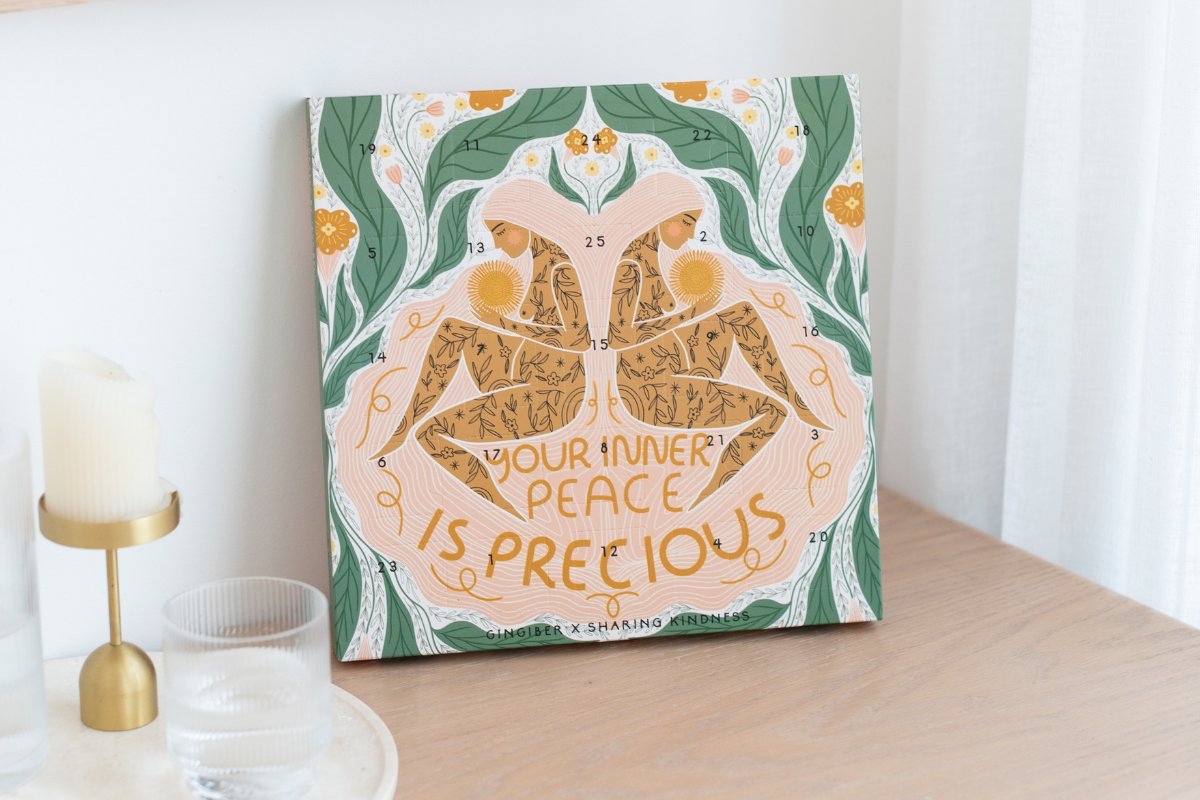
Our Box of Confidence holds 40 hand-drawn affirmation cards with simple words and four characters a teen can relate to. It does not ask a teen to perform. It asks them to read one card, think about it, and maybe talk.
Box of Confidence - Affirmation Cards →

Watch out: avoid stacking a gift with pressure to feel better fast. If a teen senses the card is a test they can fail, it goes in a drawer.
EXTERNAL_LINK: Headspace advice on supporting a young person with anxiety | headspace.org.au
Stress Relief Gifts for Teenagers That Do More Than Smell Nice
Stress relief gifts for teenagers earn their place when they support a coping strategy the teen will repeat. A scented candle smells pleasant for an evening. A tool that helps with emotional regulation gets used on the hard days, which is the point. The difference between a calming gift and a confidence-building one is that the second gives the teen evidence they can handle something, not just a temporary shift in mood.
Weighted items and comfort objects can offer a sense of physical steadiness.
The strongest combination pairs something to hold with something to do, because a teen who is holding a smooth stone and writing a single sentence has two points of focus instead of a spiral of worry.
| Coping style | Gift idea | Why it helps |
|---|---|---|
| Overthinking | Gratitude rock, journalling prompts | Grounding techniques, pulls focus to the present |
| Social shutdown | Affirmation cards, pass-it-on stones | Builds social confidence in small steps |
| Restless energy | Fidget tools, creative supplies | Tactile stimulation, stress reduction |
| Needs calm space | Aromatherapy, weighted items | Supports a calming environment |
Watch out: a gift that only calms can become a crutch if the teen never learns to use it independently. Choose items that come with a simple instruction or prompt so the teen knows what to do when they pick it up, rather than relying on you to guide them every time.
Confidence-Building Activities for Teenagers You Can Do Together
A shared activity can give you something to do side by side, which some teens find easier than a face-to-face talk.
Try these together:
- Take turns drawing one affirmation card at dinner and saying what it means to you.
- Play the Positive Mindset Game as a family and let the teen ask the questions too.
- Start a 30-day kindness challenge together.
- Keep a shared gratitude rock on the kitchen counter and add one thought a day.
If your teen is younger or you want more ideas for the same goal, our guide to 7 confidence gifts for children starting school covers the earlier years.
Budget-Friendly and DIY Confidence Gifts That Still Feel Thoughtful
A thoughtful gift does not need a big price tag. Some of the most useful confidence gifts cost very little, because what a teen remembers is the gesture and the permission to use it, not the receipt.
Printable affirmation cards are available at a lower cost than the physical set, and a printable 30-day kindness challenge can turn a month into a shared project.
If you are working to a budget and want to choose a few pieces, you can build your own bundle and pick the items that suit your teen.
Box of Confidence - Affirmation Cards →
Choosing a Gift for a Cynical or Neurodivergent Teen
For a cynical teen, the gift has to survive an eye roll. Skip anything that announces its purpose on the packaging and choose something with a second use. A card game is a game first. A set of stones is a nice object first. The confidence-building part happens in the background, and that is exactly why it works.
Neurodivergent teens often need clear, predictable formats. Cards with one idea per card, a game with set levels, and a rock with a single instruction all reduce the load. Avoid gifts that demand eye contact, a long conversation, or a public display of feelings.
Age-appropriate nuance matters here too. A 13-year-old and a 17-year-old need different language and different levels of independence. Younger teens often prefer a game or a shared activity because it gives them a script to follow. Older teens usually want something they can use alone, without a parent watching, and they are more likely to engage with a journal or a set of cards they can keep in their room. Let the teen choose the card or the prompt rather than choosing for them, because the act of choosing is itself a small confidence signal.
Watch out: if your teen has told you plainly that they do not want a feelings gift, respect that and choose something practical instead. A practical gift that happens to support regulation, such as a good backpack with a smooth zip or a set of noise-reducing earplugs, can do more for confidence than a box of affirmations they never open.
Picking the Right Confidence Gift from Sharing Kindness
Start with how your teen copes, then choose the smallest tool that fits. Here is how our range maps to the four coping styles above.
| Product | Price | Best for |
|---|---|---|
| Box of Confidence - Affirmation Cards | $42.95 | Teens who need gentle daily prompts |
| Printable Affirmation Cards | $12.95 | Budget-friendly, on-the-go use |
| Positive Mindset Game | $59.95 | Families who want to talk side by side |
| Gratitude Rock | $12.95 | Overthinkers who need a pocket anchor |
| Kindness Crystals Pass-It-On Set | $9.95 | Shy teens building social confidence |
| Crystal Calendar | $129.00 | A bigger self-care gift for an older teen |
| 30-Day Kindness Challenge | $2.95 | A shared month-long project |
| Kindness Bucket List Kit | $2.95 | Classrooms and families |
Best for: parents who want a tool rather than a trinket. Skip if: your teen has told you plainly that they do not want a feelings gift; respect that and choose something practical instead.
Anxious teenagers rarely ask for help in a straight line, so the gift you choose has to do some of the work for them. Sharing Kindness makes products designed to start that conversation gently: the Box of Confidence with its 40 hand-drawn affirmation cards, the Positive Mindset Game with its story prompts and gratitude moon rock, and the Kindness Crystals Pass-It-On Set for teens who find people easier one small gesture at a time. Get started with Sharing Kindness and give your teen a tool they can use on their own terms.
Frequently Asked Questions
What is a good gift for an anxious teenager?
A good gift for an anxious teenager is one that gives them a practical way to manage worry without drawing attention to it. Small, portable items work well because they can be used discreetly at school or before bed. A pocket-sized gratitude rock, a set of affirmation cards kept in a pencil case, or a simple journal all give a teen a private tool. The best confidence-building gifts for anxious teenagers are the ones they will actually reach for on a hard day, so match the gift to what they already do when stressed.
How do I choose a supportive gift for a teen with anxiety?
Start by watching how your teen already copes. A teen who fidgets or paces may use a tactile object like a smooth stone or a small crystal set. One who writes or draws will use a journal or creative supplies. One who talks things through may prefer a game or question cards that make conversation easier. Then check the gift does not feel like a label. Avoid anything that suggests they need fixing. Frame it as a tool for anyone, and let them decide how much to use it.
Are self-care gifts suitable for teenagers with anxiety?
They can be, when the gift is age-appropriate and not patronising. Teenagers often respond well to items that feel grown-up and private, such as a crystal set with meaning cards, a calming scent for their room, or a journal with prompts. What matters is the framing. A self-care gift given as a normal part of looking after yourself lands better than one given as a treatment for anxiety. Keep the focus on comfort and choice rather than on managing a problem.
How can I help my teenager with anxiety day to day?
Practical support helps more than reassurance alone. Keep routines predictable, encourage sleep and movement, and make space for them to talk without being interrogated. Tools like grounding techniques, journalling prompts and simple breathing exercises give a teen something to do when worry spikes. Confidence-building activities for teenagers, such as volunteering, learning a skill or taking on a small responsibility, also build a sense of capability over time. If anxiety is affecting school or daily life, speak to your GP about further support.
