


Last Updated: November 8, 2026
Quick Summary
The best kindness challenge kits for teens include printable options from AUD 2.95 and physical sets from AUD 9.95, such as the 30-Day Kindness Challenge and Kindness Bucket List Kit. Teens tend to respond best to kits offering short, concrete tasks with clear end points and room to choose their own acts.
- Printable kits such as the 30-Day Kindness Challenge start at AUD 2.95.
- Physical options include the Kindness Crystals Pass-It-On Stone Set at AUD 9.95.
- Teens respond better to choice, low stakes and visible progress than to lectures.
- Specific, time-bound acts that need no audience usually work better than broad instructions.
- A one-to-four-week challenge is long enough to build a habit without fading out.
Table of Contents
- Why Teens Respond Better to Kindness Challenges Than Lectures
- How We Chose the Kits in This Comparison
- Quick Comparison: Kindness Challenge Kits for Teens
- Kindness Activities for Teenagers That Work in Practice
- Random Acts of Kindness for Teens Who Are Sceptical
- Kindness Activity Kit for School: Running It Well
- Kindness Challenge Ideas for Students and How Long to Run Them
- Choosing Your Teen's First Kindness Kit This Week
- Frequently Asked Questions
Why Teens Respond Better to Kindness Challenges Than Lectures
Teenagers tend to switch off when they feel lectured, and a kindness challenge kit gives them something to do instead of something to sit through. A short, concrete task with a clear end point asks for action rather than agreement. That difference matters more with teens than with younger children, who often enjoy a talk and a sticker chart alike.
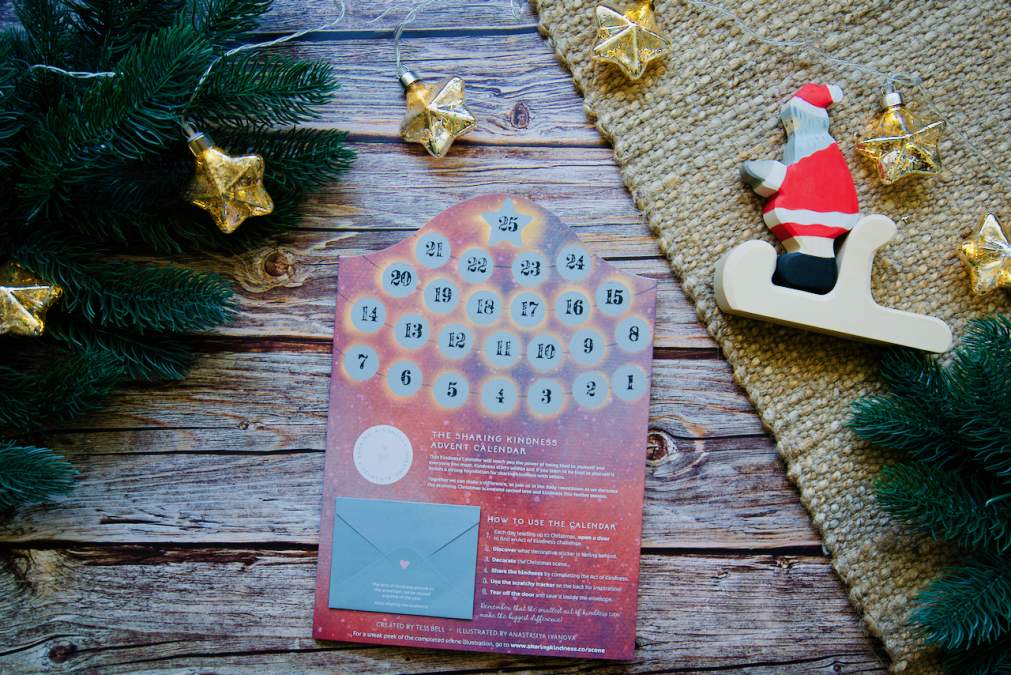
Sharing Kindness has built its kits around that idea. Our Kindness Bucket List Kit and 30-Day Kindness Challenge are designed for families, classrooms and friendship groups alike. Choice matters. A teenager who picks the kindness act is far more likely to finish it.
Several things make a challenge work for this age group:
- Low stakes: a single small act a day is easier to agree to than a big commitment.
- Visible progress: ticking off a list gives a satisfying sense of momentum.
- Peer involvement: challenges shared with a friend or group feel less like a parental project.
- Real outcomes: acts that affect someone the teen actually knows feel more meaningful than abstract goals.
The best challenges also avoid moralising. Telling a fifteen-year-old to "be kinder" rarely lands. Giving them a prompt, a timeframe and room to decide how they carry it out usually does.
How We Chose the Kits in This Comparison
This comparison covers the kindness products in our own range. It is not a survey of the whole market.
The kits are described below by format, price and who they suit.
Quick Comparison: Kindness Challenge Kits for Teens
| Kit | Format | Starting price | Best for |
|---|---|---|---|
| 30-Day Kindness Challenge [PRINTABLE] | Digital download | AUD 2.95 | Teens who like a structured daily task |
| Kindness Bucket List Kit [PRINTABLE] | Digital download | AUD 2.95 | Teens who prefer open choice and a list to tick off |
| Kindness Crystals Pass-It-On Stone Set | Physical gift set | AUD 9.95 | Sceptical teens who respond to a small tactile object |
| Kindness Pin Badges | Physical accessories | AUD 9.95 | Teens who want a visible way to show their values |
| Kindness Advent Calendar (Scandi Forest) | Physical advent calendar | AUD 36.95 | Families building a daily habit across December |
| Kindness Advent Calendar (Aussie Beach) | Physical advent calendar | AUD 36.95 | Families wanting a daily habit across December |
| Kindness Advent Calendar (Japan Express) | Physical advent calendar | AUD 36.95 | Families wanting a daily habit across December |
| Kindness Advent Calendar (Paris Museum) | Physical advent calendar | AUD 39.95 | Families wanting a daily habit across December |
Starting price
Prices are as listed in our current catalogue and may change.
The two printables are the lowest-priced options in this list. The physical items suit a teen who would rather hold something than print something.
Kindness Activities for Teenagers That Work in Practice
The activities teens respond to are rarely the ones adults expect. Grand gestures often feel forced, while small, specific acts tend to stick. Ideas that tend to work include writing a short, genuine note of thanks to a teacher or coach, offering to help a sibling with homework without being asked, checking in on a friend who has gone quiet in a group chat, and cooking or clearing up after dinner without being prompted.
What makes these work for teenagers is that they are specific, time-bound and do not require an audience. A fifteen-year-old will usually agree to send one message to a friend. They will usually refuse a task described as 'spread kindness today'. The wording matters as much as the act. Framing the task as a small favour or a practical help can land better than framing it as a kindness challenge, especially with older teens.
Age suitability is worth thinking through. Younger teens in Years 7 to 9 often enjoy a visible list they can tick off, and the Kindness Bucket List Kit suits this group because the prompts are varied and the format is easy to laminate and reuse. Older teens in Years 10 and 11 tend to prefer acts they can do privately, without a sheet on the fridge. For them, the Kindness Crystals Pass-It-On Stone Set works because it involves no checklist and no score: keep one stone, give one away, or leave one somewhere for a stranger to find. Sixth-formers often respond best to acts tied to something they already care about, such as helping at a club, volunteering with a cause they have chosen, or supporting a younger pupil with a subject they are good at.
Inclusive participation needs a little thought. Where teens have additional needs, offering a written list of options and letting them choose the pace can help. Acts that do not depend on physical movement or speech, such as sending a message or writing a note, can also be included. For families with limited budgets, prompts that do not require buying anything can keep the activity accessible.
Our Kindness Bucket List Kit is built around a list of options. Teens can frame it, tick items off with a whiteboard pen, or turn it into a school project. A practical tip: let the teen choose the act. Adults often suggest what they think is kind, and teens quickly spot the difference between their own idea and one handed to them. Letting teens choose how to act can also mean giving them room to express kindness through making, with craft kits for creative relaxation offering another way to turn their own ideas into something thoughtful.
Random Acts of Kindness for Teens Who Are Sceptical
Some teenagers will roll their eyes at anything labelled as a kindness project. A more open-ended option is the Kindness Bucket List Kit, which teens can start at their own pace. For them, the approach matters more than the product. Keep the activity low-pressure, avoid a formal launch and let the teen decide whether and how to join in.

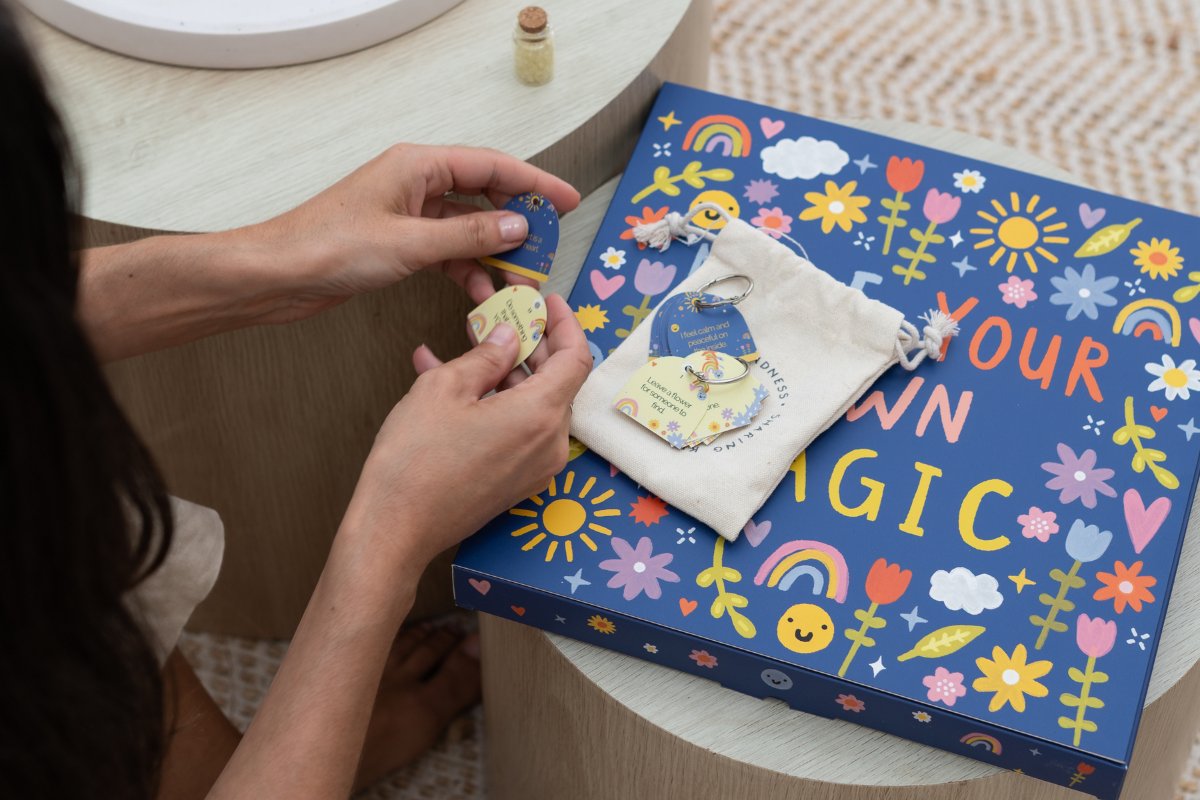
The Kindness Crystals Pass-It-On Stone Set can help here. Each of the three raw stones comes with a small card and a velvet bag, and the idea is simple: keep one, give one away, or leave one somewhere for a stranger to find. There is no checklist and no score, which suits a teen who resists anything that feels like homework.
Watch out: if a teen feels pressured to show enthusiasm, the activity can backfire. Offer it once, make it easy to decline, and let them come back to it later.
Kindness Activity Kit for School: Running It Well
A school kindness kit works best when it has a clear purpose, a manageable size and a way for students to share what they did without comparing themselves to others. Read what a well-built kit should contain. Before ordering or printing anything, a teacher or coordinator should decide how many students will take part, how long the activity will run, whether it is individual, paired or whole-class, and how completed acts will be recognised, if at all.
Group size changes what you need. A single tutor group can share one laminated Kindness Bucket List Kit and take turns ticking items off with a whiteboard pen. Find a printable kindness kit for daily practice. A larger group may need printed copies for each form or class, with a fixed time window so the sheets do not go unused.
Timing matters as much as format. Shorter challenges can fit into a tutor-time slot, while longer ones may suit a PSHE unit or enrichment block. Turning kindness into a points system can shift the focus away from the people involved, so many schools avoid ranking acts.
Inclusive participation needs planning, not a disclaimer. For neurodivergent pupils, offer the prompts in a plain font with clear spacing, allow written or drawn responses instead of spoken ones, and let pupils choose from a shortlist rather than an open-ended task. For pupils with mobility or communication needs, include acts that do not depend on physical movement or speech, such as writing a note, sending a message or helping to organise a shared space. For pupils whose families have limited budgets, avoid prompts that require buying anything, and make sure no activity depends on a phone, a printer at home or a trip out. A common pattern in schools is to run the challenge alongside a quiet alternative for pupils who find group activities difficult, so nobody has to explain why they are sitting it out.
Recognition can be low-key. A short, optional conversation at the end of the challenge gives pupils a chance to say what they noticed. Avoid public leaderboards, house-point totals and assemblies that single out individuals. A display of anonymous examples, with pupils' permission, gives the group something to look at without turning kindness into a performance.
Kindness Challenge Ideas for Students and How Long to Run Them
Length matters. A reasonable starting point is:
- One week: a light introduction, suitable for a first try or a single school week.
- Two to four weeks: long enough to build a routine. The 30-Day Kindness Challenge sits well here.
- A full term: only if the group is already keen. Check in regularly so it does not fade out quietly.
For the challenge itself, aim for one or two small acts a day rather than a long list. Mix acts that involve others with ones that involve the teen's own habits, such as saying something encouraging to themselves. Ending with a short, optional conversation about what they noticed gives the challenge a natural close.
Choosing Your Teen's First Kindness Kit This Week
If you are starting from zero, begin with the lowest-cost option that fits your teen. A printable at AUD 2.95 is a sensible first step. If your teen responds better to something physical, the Kindness Crystals set at AUD 9.95 is an inexpensive way to test the idea.
Pick one kit, agree on a start date, and let your teen decide the first act.
Start with the Kindness Bucket List Kit or the 30-Day Kindness Challenge and see what your teen chooses to do first. Add to cart from our kindness range and make the first step theirs.
Frequently Asked Questions
What are some ideas for a kindness challenge?
A good kindness challenge for teenagers works best when the tasks are small, specific and repeatable. Ideas include leaving an encouraging note for a sibling, offering to help a neighbour carry shopping, or writing a thank-you message to a teacher. The 30-Day Kindness Challenge from Sharing Kindness gives one simple act to complete each day, priced at 2.95 as a printable download. Pick a challenge that leaves room for a teen's own ideas.
What should go in a kindness activity kit for teens?
A useful kit has clear prompts, a way to track progress and something to make it feel personal. The Kindness Bucket List Kit from Sharing Kindness, priced at 2.95, offers a printable list of kind acts that can be framed, laminated or ticked off with a whiteboard pen. Physical extras such as the Kindness Crystals Pass-It-On Stone Set, at 9.95, give teens something to give away or hide for someone else to find. Look for a kit that teens can use alone or with friends, not only in a classroom setting.
How can a school run a kindness challenge for teenagers?
Start by choosing one printable challenge for the whole year group, then agree on a timeframe and a simple way for students to log their acts. The Kindness Bucket List Kit suits classroom display, and a laminated copy can be reused across terms. Keep participation voluntary and avoid ranking students by how many acts they complete.
How long should a kindness challenge last?
Most kindness challenges run for around 30 days, which matches the length of the 30-Day Kindness Challenge printable. Thirty days gives a clear, bounded run. Shorter challenges of one or two weeks work well for a school kindness week or a family trial. Whatever the length, a clear start and end date helps teens see the challenge as a project rather than an open-ended obligation.
