


Last Updated: November 17, 2026
Quick Summary
A mindfulness advent calendar for families replaces the daily chocolate with a short shared moment of calm, kindness or reflection, giving children something to do rather than something to eat. Choose one with clear daily prompts that match your children's ages and fit your December schedule. The best options take under ten minutes a day and start conversations.
- Advent gives you twenty-five built-in chances to build emotional resilience at the same time every day.
- Family mindfulness activities work best when they take under ten minutes and need no equipment.
- Children aged four to twelve manage short breathing exercises and gratitude questions better than long sit-down practices.
- Keep three prompts on rotation rather than twenty-five, because children find repetition comforting.
- A kindness-based calendar tends to win for families because it gives children something to do together.
Table of Contents
- Why a Mindfulness Advent Calendar Beats Chocolate
- What to Look For in a Mindfulness Advent Calendar for Families
- Family Mindfulness Activities That Fit Inside 25 Days
- Mindfulness Activities for Children by Age Group
- Daily Mindfulness Prompts for Families to Use All Year
- Christmas kindness activities for kids to pair with your calendar
- Choosing Your Family's Advent Calendar This Christmas
- Frequently Asked Questions
Why a Mindfulness Advent Calendar Beats Chocolate
A mindfulness advent calendar for families replaces the daily chocolate treat with a small, shared moment of calm, kindness or reflection. It gives children something to do rather than something to eat, and it turns the countdown to Christmas into a habit the whole household can join.
Most parents we speak to are not anti-chocolate. They are tired of the 7am sugar rush before school, the foil wrappers under the sofa, and the way December can feel like a month of managing behaviour instead of enjoying each other. A chocolate calendar lasts about ninety seconds a day. A kindness or mindfulness calendar lasts a conversation.
The evidence for the general principle is solid. The NHS advice on children's mental wellbeing notes that simple, regular routines and chances to talk about feelings help children build emotional resilience. Advent gives you twenty-five built-in chances to do exactly that, at the same time every day.
And there is a practical bonus: a non-chocolate calendar can be reused, gifted on, or kept as a keepsake. Chocolate is gone by Boxing Day. A small collection of stones, cards or notes becomes part of the family's December story.
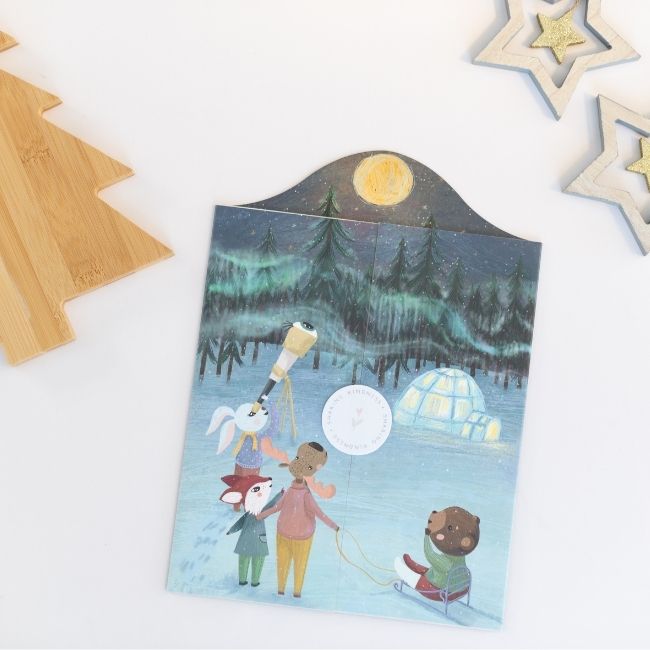
Our Kindness Advent Calendar is built around this idea: a daily act of kindness for children and families, designed to spark conversation rather than a sugar high. Hoda and Jenna on TODAY said it was "much sweeter than chocolate".
What to Look For in a Mindfulness Advent Calendar for Families
The best mindfulness advent calendar for families is one that matches your children's ages, fits your December schedule, and gives you something to talk about rather than something to throw away. Look for clear daily prompts, age-appropriate content, and materials that will survive being handled by excited hands.
Here is what we would check before buying any calendar:
- Daily prompt quality. A one-word instruction ("breathe") is fine for teens, useless for a five-year-old. Look for prompts that name a specific action.
- Age range stated clearly. Vague "for kids" labelling usually means it suits nobody perfectly.
- Materials and size. Small parts are a choking risk for under-threes; check the listing (PRISM: Narrative style risk assessment - non-compliant toy with a detachable part).
- Whether it is consumable or keepsake. Chocolate disappears. Cards and stones do not.
- Family involvement. A calendar a child opens alone is nice. One that pulls in siblings or grandparents is better.
- Values fit. If a calendar's prompts clash with how you parent, it will sit in a drawer by 4 December.
If you want a fuller side-by-side of what is on the market, our guide to advent calendars for kids walks through the options in more detail.
Family Mindfulness Activities That Fit Inside 25 Days
Family mindfulness activities work best when they take under ten minutes and need no equipment. The aim is a shared pause, not a meditation session. Children aged four to twelve can manage a short breathing exercise, a gratitude question or a kind gesture far more reliably than a long sit-down practice. A brief gratitude question or kind gesture can also open the door to thoughtful words, with The Promise Letters™ offering another way to make those small moments of connection part of family life.
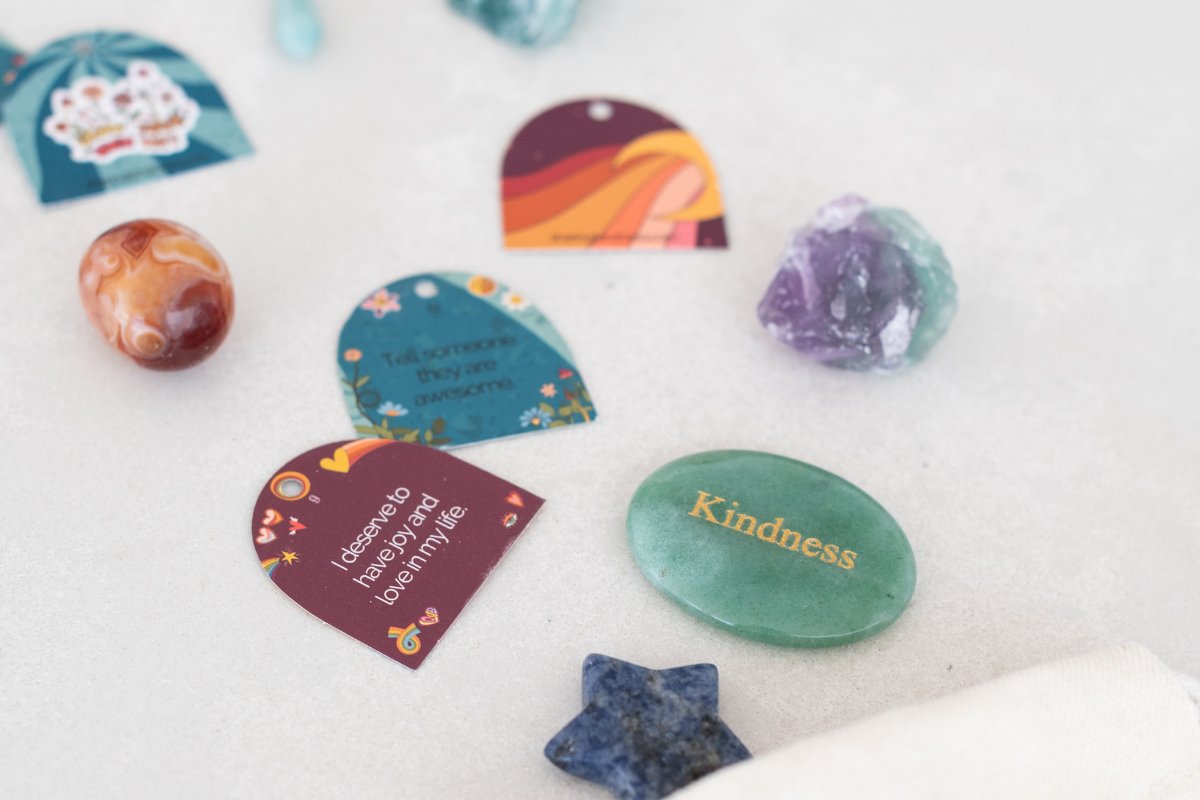
Here are some prompts that slot neatly into a calendar:
- Three slow breaths before opening the day's panel.
- One kind thing done for someone in the house before school.
- A gratitude question at dinner: "What is one good thing from today?"
- A two-minute quiet listen: what can you hear right now?
- A compliment passed on to a sibling, teacher or grandparent.
- A small helping job chosen by the child, not assigned.
The point is repetition, not perfection. Some days will be rushed and grumpy. That is fine. If you want a ready-made list of prompts to fill your own calendar, our advent calendar activities for kids page has plenty.
Mindfulness Activities for Children by Age Group
Mindfulness activities for children need to change as they grow. A breathing game that delights a five-year-old will get an eye roll from a ten-year-old. Matching the activity to the age is the difference between a habit and a fight.
| Age group | What works | What to avoid | Example prompt |
|---|---|---|---|
| 4-6 | Sensory play, short breathing games, simple kind acts | Long instructions, abstract concepts | "Give someone a hug and say why" |
| 7-9 | Gratitude questions, helping jobs, drawing feelings | Babyish language, being told to sit still | "Draw how today felt" |
| 10-12 | Choice and ownership, real-world kindness, reflection | Being talked down to, forced sharing | "Plan one kind act for a neighbour" |
A ten-year-old who is sceptical about anything that feels try-hard will engage far more if they get to choose the act, run it themselves, and report back.
For more on the thinking behind this, the Raising Children Network guide to child development is a useful, plain-language reference for what is realistic at each stage.
Daily Mindfulness Prompts for Families to Use All Year
Daily mindfulness prompts for families only stick if they are short, predictable and attached to something you already do. The trick is to hang the prompt on an existing routine: breakfast, the school run, or bedtime. December builds the habit; January is where you decide whether to keep it.
Our suggestion is to keep three prompts on rotation rather than twenty-five. Children find repetition comforting, and you will actually remember them.
- Morning: "What is one thing you are looking forward to today?"
- After school: "What was one kind thing you saw or did?"
- Bedtime: "What is one thing you are thankful for?"
If you want to build this into a longer-term habit, our step-by-step guide on how to start a family gratitude practice walks through it properly.
Christmas kindness activities for kids to pair with your calendar
Christmas kindness activities for kids work best when they are small, visible and finished within the day. Big charity projects are lovely in theory but hard to sustain in the middle of December. A card for a neighbour, a thank-you note to a lollipop lady or man, or a shared biscuit delivered to a grandparent all count.
Pair the calendar with one or two slightly bigger moments:
- A food bank donation the child chooses and packs themselves.
- A handwritten card to someone who lives alone.
- A "kindness jar" where the family drops in notes about kind things they saw.
If you want to go deeper on teaching the underlying skill, our parent's guide on how to teach kindness to kids covers the practical side.
Choosing Your Family's Advent Calendar This Christmas
Choosing well comes down to three questions: does it suit your children's ages, will it survive December, and will it start conversations? Everything else is packaging. A calendar that gets opened every morning and sparks even one good chat is doing its job.
A quick comparison of the main options families weigh up:
| Option | Best for | Watch out for |
|---|---|---|
| Chocolate calendar | Very young children, tradition | Sugar before school, waste |
| Toy or trinket calendar | Children who need a "thing" | Clutter, small parts |
| Kindness or mindfulness calendar | Families wanting conversation and values | Needs a few minutes of adult input |
| Crystal or affirmation calendar | Older children, teens, adults | Not suitable for very young children |
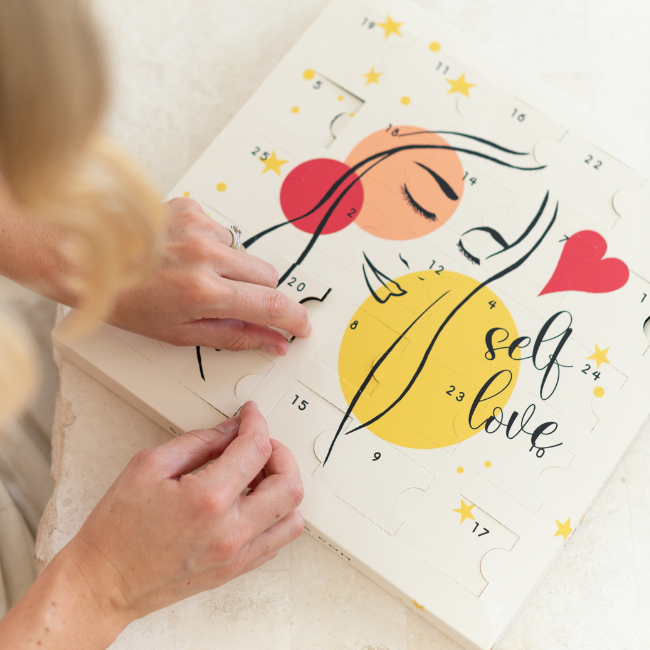
For families, a kindness-based calendar tends to win because it gives children something to do together. For the adults in the house, our Crystal Advent Calendar | Self-Love offers twenty-five crystals and twenty-five mini affirmation cards, and it suits older teens and adults rather than young children. Please note the listing's safety guidance: it is not suitable for children who tend to put small objects in their mouths.
December is short, and the pressure to make it perfect is real. The simplest thing you can do is pick one small daily ritual and repeat it, even on the days it goes sideways. If you want a calendar that does the prompting for you, our kindness advent calendars are designed for exactly that, with a daily act of kindness, a keepsake format, and we give back to charities. Get started with Sharing Kindness and turn the countdown into twenty-five small moments your family actually remembers.
Frequently Asked Questions
What can you put in a family mindfulness advent calendar?
Small prompt cards work best: one breathing exercise, one kindness task or one gratitude question per day. You can add a stone, a sticker or a short note. The point is a single, doable moment rather than a gift. A mindfulness advent calendar for families works when each day takes under ten minutes and needs no preparation, so keep prompts printed and ready before December starts.
How long should a mindfulness activity for children last?
Match the length to the child's age. For four- to six-year-olds, two to three minutes of breathing or a single sensory game is plenty. Seven to nine year olds can manage five minutes. Ten to twelve year olds will sit with a five to ten minute prompt if it feels like a choice rather than a lesson. Short and repeated beats long and occasional, especially in the busy weeks before Christmas.
What if we miss a day of our advent calendar?
Skip it and move on. The calendar is a prompt, not a test, and turning a missed day into a catch-up pile defeats the purpose. Open two panels the next day if your children want to, or leave the missed one closed. Families who finish 20 of 25 days have still built a habit. Guilt is the fastest way to make children resist the whole thing next year.
Can a kindness activity be part of a mindfulness advent calendar?
Yes, and it is often the part children remember. Kindness and mindfulness overlap because both ask a child to notice something outside their own impulse. A Christmas kindness activity for kids, such as writing a note to a neighbour or helping carry shopping, gives the calm breathing practice somewhere to go. Pair one kindness task with one quiet prompt each day and you cover both.
