


Last Updated: 18 November 2026
Quick Summary
Affirmation cards are small cards printed with short, positive statements you read aloud or silently to interrupt a stress spiral and reset your focus. Keep one where the stress happens, such as beside your keyboard, and read it at a set moment with one slow breath. The whole practice takes under a minute.
- Read one card, take one slow breath and put it back in under a minute.
- Keep a card next to your keyboard or propped in a holder so it stays visible.
- Use cards before opening your inbox, between meetings and when your shoulders rise.
- Write one short statement per card in your own handwriting on index cards or card stock.
- Keep three cards visible for seven days rather than choosing a new one each morning.
Table of Contents
- Why Affirmation Cards Work When Your Workday Falls Apart
- How to Use Affirmation Cards During a Stressful Workday
- Positive Affirmations for Work Stress That You Can Say Out Loud
- Positive Affirmations for Stress and Anxiety When Your Chest Tightens
- Positive Affirmations for Work Confidence Before a Hard Conversation
- Weekly Affirmations: Building a Daily Practice That Sticks
- Choosing Your Affirmation Cards and Keeping Them Close
Why Affirmation Cards Work When Your Workday Falls Apart
Affirmation cards are small cards printed with short, positive statements you read aloud or silently to interrupt a stress spiral and reset your focus.
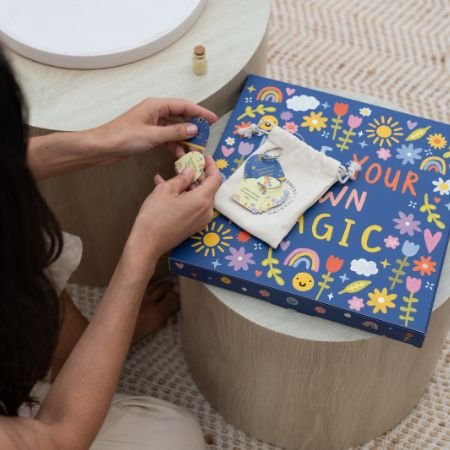
Stress narrows your thinking. When your chest tightens before a meeting or your inbox hits forty unread messages, your brain reaches for the worst-case scenario first.
The card is not magic on its own. It can help because it interrupts a habit.
How to Use Affirmation Cards During a Stressful Workday
Using affirmation cards well comes down to timing and repetition, not volume. Read one card at a set moment, say the words out loud or in your head, take one slow breath, and put it back.
A common mistake is treating the cards like a lucky charm you glance at once and forget. To prepare a set, our printable affirmation cards let you print and cut a deck at home.
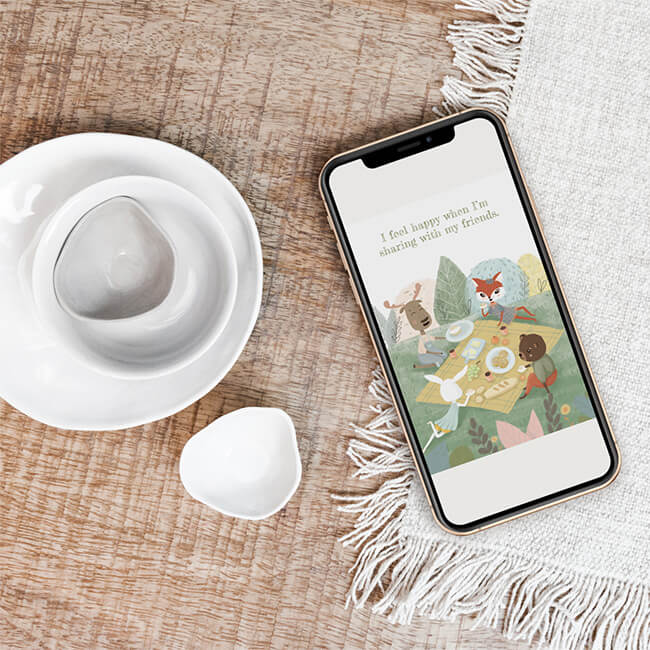
Three Moments in the Day That Suit a Card Best
- Before you open your inbox. Pick a card that sets your intention for the day, so the first message you read does not set your mood instead.
- Between back-to-back meetings. A single card in the two-minute gap helps you close one conversation before starting the next.
- When you notice your shoulders rising. Use the card as a physical cue to breathe and reset your posture.
Watch out: if you only reach for the cards after you are already overwhelmed, you will associate them with crisis. Use them at calm moments too, so they become a routine rather than an emergency tool.
Making Your Own Cards: A Simple DIY Guide
Most guides assume you will buy a deck, but making your own cards ensures the words feel believable and relevant to your workday. Start with blank index cards or card stock cut to business-card size. Write one statement per card in your own handwriting, keep the language short enough to read in a single breath, and avoid statements that feel like a stretch too far.
If you prefer a structured starting point, print a template with prompts such as "What do I need to hear before a difficult meeting?" Once you have ten to fifteen cards, sort them into two piles: one for high-stress moments and one for routine check-ins. Keep the high-stress pile in your desk drawer and the routine pile in a visible spot, so you do not dilute their effect. Keeping the two piles distinct also makes it easier to choose a small physical reset when a card is not enough, such as exploring <a href="�UKS15� to desk stress balls.
Why the Physical Card Works Better Than a Phone Reminder
A card on your desk interrupts your visual field. You see it without unlocking a device, so you do not have to fight the pull of notifications to reach it. The physical action of picking up a card, feeling its edges, and putting it down gives your hands a small task while your nervous system settles. A phone reminder is easy to swipe away; a card beside your keyboard is harder to ignore.
Integrating Cards with Your Digital Workflow
If you work primarily on a computer, you can still use physical cards alongside digital tools. Set a calendar reminder for a mid-morning and mid-afternoon card break, and keep the card in your line of sight so the reminder prompts an action rather than a snooze. Some people change their Slack status to a short affirmation for the day, which serves as a passive reminder and a signal to colleagues that they are in focused mode.
A Note on Repetition and Realistic Expectations
Affirmation cards are not a cure for a toxic workplace or an unmanageable workload. They can create a brief pause between a trigger and your reaction. Start with one card in one location and use it at the same time each day for a week.
Positive Affirmations for Work Stress That You Can Say Out Loud
Positive affirmations for work stress work best when they are specific and believable. Choose words that feel like a stretch but not a lie, and say them out loud when you can, because hearing your own voice carries more weight than reading silently.
Here are statements you can borrow or adapt:
- "I can handle this one thing at a time."
- "This deadline is tight, not impossible."
- "I am allowed to ask for help today."
A useful test: read the line and notice whether your body relaxes slightly. If it makes you tense or cynical, swap it for something softer. The goal is emotional regulation, not performance.
Positive Affirmations for Stress and Anxiety When Your Chest Tightens
Positive affirmations for stress and anxiety are shorter and calmer than work-stress statements. When anxiety spikes, long sentences are hard to process, so keep it to one line and pair it with a slow breath.
If you are navigating a genuinely difficult period, these tools sit alongside professional support, not in place of it. Talk to your GP if anxiety is affecting your sleep or daily life (the NHS).
Positive Affirmations for Work Confidence Before a Hard Conversation
Positive affirmations for work confidence are the ones you prepare in advance. Before a performance review, a negotiation, or a conversation with a difficult colleague, pick two cards and read them in the five minutes before you walk in.
Try lines like:
- "I have handled harder conversations than this."
- "I can be clear and still be kind."
- "My perspective has value in this room."
Setting professional boundaries is part of this. A confidence statement can include the boundary itself: "I can say no without explaining myself five times." Practising the sentence before the meeting makes it easier to say when it counts.
Weekly Affirmations: Building a Daily Practice That Sticks
Weekly affirmations turn a nice idea into a habit. Pick one theme for the week, such as boundaries, patience, or self-compassion, and choose three cards that match it. Keep the same three visible for seven days rather than shuffling a new one each morning, because repetition builds the neural shortcut.
A simple structure that many people find manageable:
- Monday: choose your three cards and place them where you will see them.
- Midweek: notice which one you reach for most and why.
- Sunday: reflect on one moment the card helped, then choose next week's theme.
If you want a ready-made set to build this rhythm, our printable confidence affirmations for women give you a repeatable weekly deck you can print and rotate.
Tailoring Weekly Themes to Your Role
Generic weekly themes work, but you will get more from the practice if you match the theme to your job. A remote worker who spends most of the day alone might choose connection statements, such as "I can reach out to a colleague today." A manager who runs back-to-back one-to-ones might choose boundary statements, such as "I can hold a conversation to its agreed time." Healthcare staff might choose grounding statements, such as "I can take one breath before I respond." The more specific the theme, the more relevant the card will feel when you need it.
Morning vs. Evening: Two Different Practices
Morning use sets the tone for the day.
Evening use closes the day. Choose a card that helps you let go of what did not get done, such as "I did enough for today" or "Tomorrow is a new start." Read it after you close your laptop, not before bed, so your mind has a chance to shift out of work mode.
Common Pitfalls and How to Avoid Them
Watch out: choosing too many cards at once. A deck of forty is a resource, not a daily requirement. Three cards per week is enough to build the habit without turning it into another task on your list. Another pitfall is picking statements that sound impressive but do not fit your situation. A card that says "I am fearless" will feel hollow if you are anxious.
Building a Weekly Reflection Habit
At the end of each week, spend five minutes noting which card you used most and what was happening when you reached for it. A note on your phone is enough. Over time, you will see patterns, such as reaching for boundary cards on days with back-to-back meetings or grounding cards after difficult conversations. Use those patterns to choose next week's theme, so the practice responds to your actual workday rather than following a fixed script.
Choosing Your Affirmation Cards and Keeping Them Close
Choosing affirmation cards comes down to three things: whether the words feel believable to you, whether the design makes you want to look at them, and whether they survive daily handling. A deck that sits in a drawer helps no one, so think about where the cards will live before you buy.
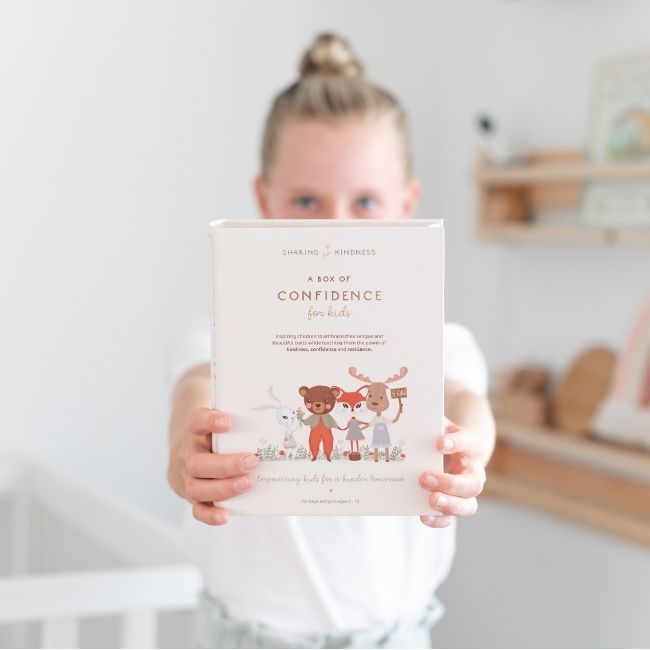
Our Box of Confidence is a set of 40 hand-drawn affirmation cards designed with children aged 4 to 12 in mind. If you want to see the deck itself, you can browse the Box of Confidence affirmation cards.
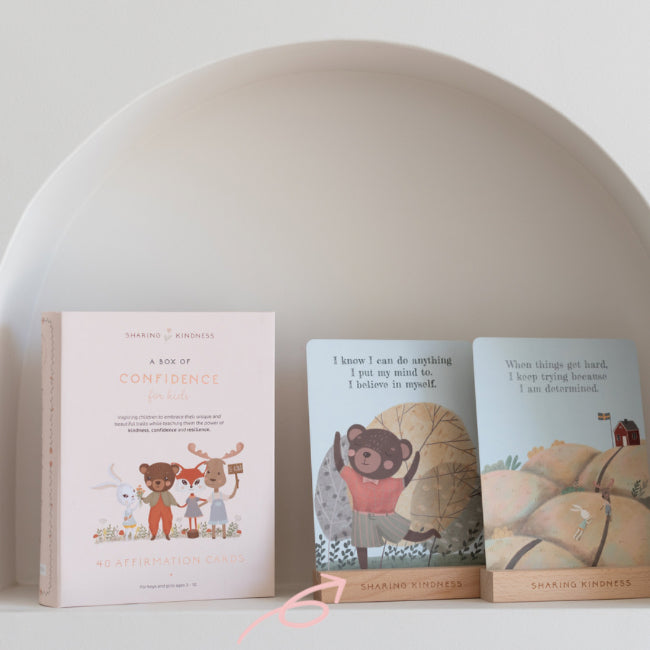
For a desk, the wooden card holder keeps one card upright and visible beside your keyboard, and our guide on how to choose an affirmation card holder for desk display walks through what to look for if you are deciding between options.
| Option | Price | Best for | Format |
|---|---|---|---|
| Box of Confidence affirmation cards | $42.95 | Families and adults who want a physical deck | 40 hand-drawn cards |
| Printable Box of Confidence cards | $12.95 | Printing a deck at home or using on the go | Digital download |
| Wooden card holder | $16.95 | Keeping one card visible on a desk | Eco-friendly wood stand |
| Gratitude Rock | $12.95 | A pocket-sized reminder for gratitude | Howlite moon stone with bag |
Price
Best for: anyone who wants a card within arm's reach during the workday. Skip if: you prefer a purely digital reminder on your phone.
A stressful workday rarely announces itself in advance, which is why the tools you keep close matter more than the ones you plan to set up later.
