


Last Updated: 20 November 2026
Quick Summary
Positive affirmations for handling workplace criticism are short, repeated statements that steady you before, during and after a difficult conversation, giving you enough calm to hear the feedback and decide what to do with it. Use them as a pause button, not a shield, and pick a phrase that feels slightly challenging but still believable.
- Breathe out slowly before you speak, then ask one clarifying question instead of defending.
- Constructive criticism names a behaviour and offers a fix; unfair criticism attacks character with no way forward.
- You can set boundaries around the tone, timing, location and volume of feedback.
- Say your chosen affirmation out loud three times, slowly, with one deep breath between each.
- After the conversation, note one thing you will act on and one thing you will let go.
Table of Contents
- Why Criticism Stings and What Affirmations Change
- How to Respond to Criticism at Work Without Spiralling
- Workplace Feedback Scripts You Can Say Out Loud
- Constructive Criticism at Work Examples (and What Unfair Looks Like)
- Setting Boundaries at Work When Criticism Crosses a Line
- 10 Positive Affirmations for Handling Workplace Criticism
- A Step-by-Step Guide to Using Affirmations Before and After Feedback
- Frequently Asked Questions
Why Criticism Stings and What Affirmations Change
Workplace criticism lands hard because it touches something deeper than the task at hand.
Positive affirmations for handling workplace criticism are short, repeated statements that help you steady yourself before, during and after a difficult conversation.
The same principle that helps a child say "I can try again" can work for an adult sitting in a performance review.
The key is to use affirmations as a pause button, not a shield.
How to Respond to Criticism at Work Without Spiralling
The first move when criticism lands is to slow the moment down. Most spiralling happens in the gap between hearing a comment and replying to it. Fill that gap with a breath and a sentence you have already practised.
When you hear criticism, your brain quickly interprets it, and that interpretation drives your emotional response. Affirmations interrupt that automatic interpretation by giving your mind an alternative thought to hold onto.
Here is a simple sequence to follow:
- Breathe out slowly before you speak.
- Say "Thank you, let me think about that" if you need time.
- Ask one clarifying question instead of defending.
- Write down what was said, word for word, before you react.
The Pause Before the Reply
That pause is where healthy boundaries begin. You are allowed to take a moment.
A common mistake is treating a fast reply as a strong reply. In practice, the calmest response usually wins the room.
Watch out: if you use the pause as an excuse to avoid the conversation entirely, the issue will grow. Set a specific time to return to it and keep that commitment.
Scripts for Specific Workplace Scenarios
Generic phrases only go so far.
When your manager criticises your work in a team meeting: "I appreciate you raising that.
When a colleague points out a mistake in front of others: "Thanks for catching that.
When you receive vague criticism like 'you need to be more proactive': "I want to act on that.
When you disagree with the criticism: "I hear your perspective. From my side, the situation was [brief fact].
Workplace Feedback Scripts You Can Say Out Loud
Having words ready removes the panic of not knowing what to say. These workplace feedback scripts are plain, professional and easy to adapt.
- "That is helpful to hear. Can you give me a specific example?"
- "I want to get this right. What would a better version look like?"
- "I hear your point about the deadline. Here is what was happening on my side."
- "I would like to take this on board. Can we check in next week?"
- "I am happy to work on that, and I would also like to talk about how the feedback was delivered."
When Your Manager Delivers Difficult Feedback
If your manager raises their voice or criticises you in front of others, you can still respond with assertiveness rather than silence. Try: "I want to discuss this properly. Can we continue this one to one?"
That sentence protects your professional limits without escalating the moment. It also signals that you take the feedback seriously, which most managers respect.
Constructive Criticism at Work Examples (and What Unfair Looks Like)
Constructive criticism points at a behaviour or a piece of work and offers a path forward. Unfair criticism points at you as a person and offers no way out.
Here is how the two compare in practice:
| What was said | Type | Why |
|---|---|---|
| "The report was late. Can we agree on earlier checkpoints?" | Constructive | Names the issue and offers a fix |
| "You always drop the ball on deadlines." | Unfair | Attacks character, no way forward |
| "This section needs clearer data. Here is an example." | Constructive | Specific and actionable |
| "You are not cut out for this role." | Unfair | Personal and final |
When feedback is constructive, take the useful part and let the rest go. When it is unfair, name it calmly and ask for it to be reframed around the work.
Setting Boundaries at Work When Criticism Crosses a Line
Setting boundaries at work is not about shutting people out. It is about naming what you will and will not accept, then holding that line with calm.
You can set a boundary around tone, timing, location and volume of feedback. For example:
- "I am happy to hear this, but not in front of the team."
- "I can talk about this now, but I need it to stay about the work."
- "I would prefer feedback in writing so I can respond properly."
If a colleague is clearly struggling after harsh criticism, a small gesture of support can help. Our guide to small gifts to encourage a friend at work has gentle ideas that do not feel over the top.
Digital Boundaries After Hours
Criticism does not always happen face to face. A late-night message can sit in your mind all evening. Set a rule that you do not read work messages after a certain hour, and answer critical feedback the next working day when you are rested.
10 Positive Affirmations for Handling Workplace Criticism
Affirmations work best when they match the moment. A phrase that helps before a performance review may not be the one you need after a harsh comment from a colleague. Here are ten affirmations, each paired with the situation it suits and a note on why it helps.
-
This feedback is about my work, not my worth. Use this when criticism feels personal. It separates the task from your identity, which is the first step in hearing the message without crumbling.
-
I can listen without agreeing to everything. Use this when you sense the feedback is unfair or inaccurate. It reminds you that listening is not the same as surrendering your judgement.
-
I am allowed to take my time to respond. Use this when you feel pressured to reply immediately. It gives you permission to pause, which is often the most professional move.
-
One hard conversation does not define my career. Use this after a difficult review or a tense exchange. It widens your perspective beyond the single moment.
-
I can be kind to myself while I improve. Use this when you are tempted to spiral into self-criticism. It pairs self-compassion with growth, which is more sustainable than harsh self-talk.
-
My value is bigger than one mistake. Use this when a specific error is being discussed. It acknowledges the mistake without letting it swallow your whole sense of competence.
-
I can ask for clarity and still be professional. Use this when feedback is vague. It reassures you that asking questions is not a sign of weakness but of engagement.
-
I choose calm over defending myself. Use this when you feel the urge to argue back. It redirects your energy from defence to composure, which usually serves you better in the room.
-
I am learning, and learning is allowed. Use this when you are new to a role or tackling a new challenge. It normalises the learning curve and reduces the sting of not knowing yet.
-
I can hold a boundary and stay respectful. Use this when you need to push back on how feedback is delivered. It reminds you that boundaries and professionalism can coexist.
If you want a physical set to keep on your desk, our Box of Confidence affirmation cards are hand-drawn, warm and made to be used, not stored in a drawer. We also have a printable set of affirmation cards for stressful workdays if you prefer to keep them on your phone.
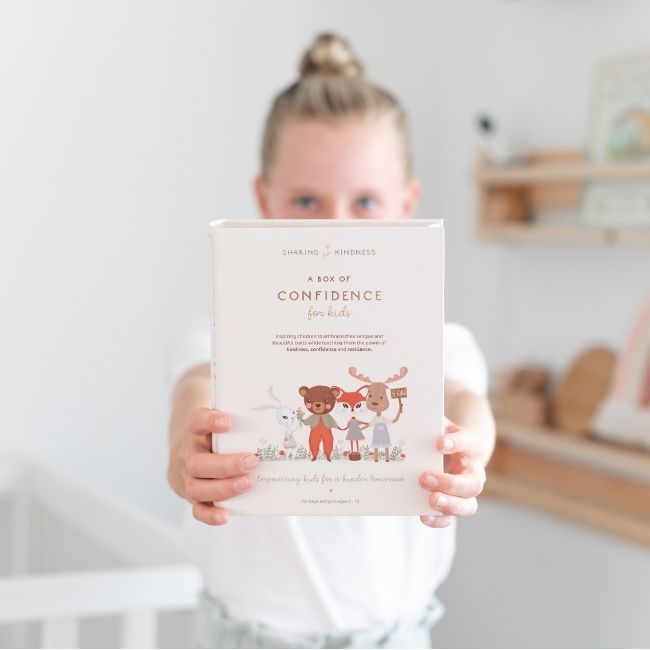
Watch out: if you repeat an affirmation that feels untrue, it may feel hollow. Choose the phrase that feels slightly challenging but still believable, and build from there.
A Step-by-Step Guide to Using Affirmations Before and After Feedback

For parents, the same habit can be shared with children. Our Box of Confidence is built for kids aged 4 to 12.
Workplace criticism will keep coming, and you cannot control how it is delivered. You can control the words you use on yourself before and after.
Frequently Asked Questions
What are some positive affirmations I can use for workplace criticism?
Choose short lines you can repeat silently in the moment. Try: 'This feedback is about my work, not my worth.' 'I can listen without agreeing to everything.' 'I am allowed to ask for specifics.' 'One comment does not define my whole performance.' 'I can take what is useful and leave the rest.' Keep two or three that feel believable rather than grand. Repeating a line you half-believe does little; a line you mostly believe gives you enough steadiness to respond instead of react.
How do I tell constructive criticism from unfair criticism?
Constructive criticism points at something specific and changeable: a missed deadline, a report with unclear figures, a meeting where you spoke over someone. It usually comes with a direction for next time. Unfair criticism is vague ('you're just not cutting it'), aimed at your character rather than your work, delivered in front of an audience, or repeated with no example. If you cannot name what you would do differently afterwards, ask for an example. If none comes, that tells you something useful about the feedback itself.
What should I say when my manager gives me difficult feedback?
Slow the exchange down with three short phrases. First: 'Thanks for telling me directly.' Second: 'Can you give me a specific example so I understand what to change?' Third: 'Can I take this away and come back to you by Thursday with a plan?' That buys you thinking time and shows you are taking it seriously. If you feel your voice going, say: 'I want to give this proper thought, so let me come back to you.' Nobody reasonable objects to that.
How can affirmations help with confidence at work when I don't believe them yet?
Start with lines you can accept at about 70 per cent, not ones that feel like a stretch. 'I am still learning this' is easier to swallow than 'I am brilliant at this'. Say them before a feedback meeting, not after, so they act as a buffer rather than a rescue. Pair the words with an action: write down one thing you handled well that week. The words alone are thin. The words plus evidence start to shift how you walk into the room.
