


Last Updated: 22 November 2026
Quick Summary
Kindness games online are digital activities that help children practise empathy, sharing and positive behaviour through play. The best ones prompt a conversation or a real act of kindness away from the screen. Choose by age, reading level and whether the game invites talk rather than scoring.
- Ages three to five suit picture-only prompts and sessions of five to ten minutes.
- Ages nine to twelve respond better to open questions and scenario cards than scoring games.
- Check whether a game allows untimed play, read-aloud options and responses by speaking or drawing.
- Use a three-question debrief under five minutes after play to turn the game into a talking point.
- After playing, agree one specific small kindness step for the week and track it on paper.
Table of Contents
- What Are Kindness Games Online?
- Kindness Games Online for Kids: Picking the Right Fit by Age
- Kindness Games Online Free: What to Look For
- Empathy Games for Children That Build Real Connection
- Online Safety Games for Students and How to Play Safely
- Helping Parents Mediate Screen Time Without the Battles
- Moving From Screen to Real Life: Your Next Kindness Step
- Frequently Asked Questions
What Are Kindness Games Online?
Kindness games online are digital activities that help children practise empathy, sharing and positive behaviour through play. For a parent, the real question is whether a game makes kindness feel natural, or whether it turns into another screen that gets in the way of connection. The best ones give children a reason to talk, notice feelings and try small acts of kindness in everyday life.
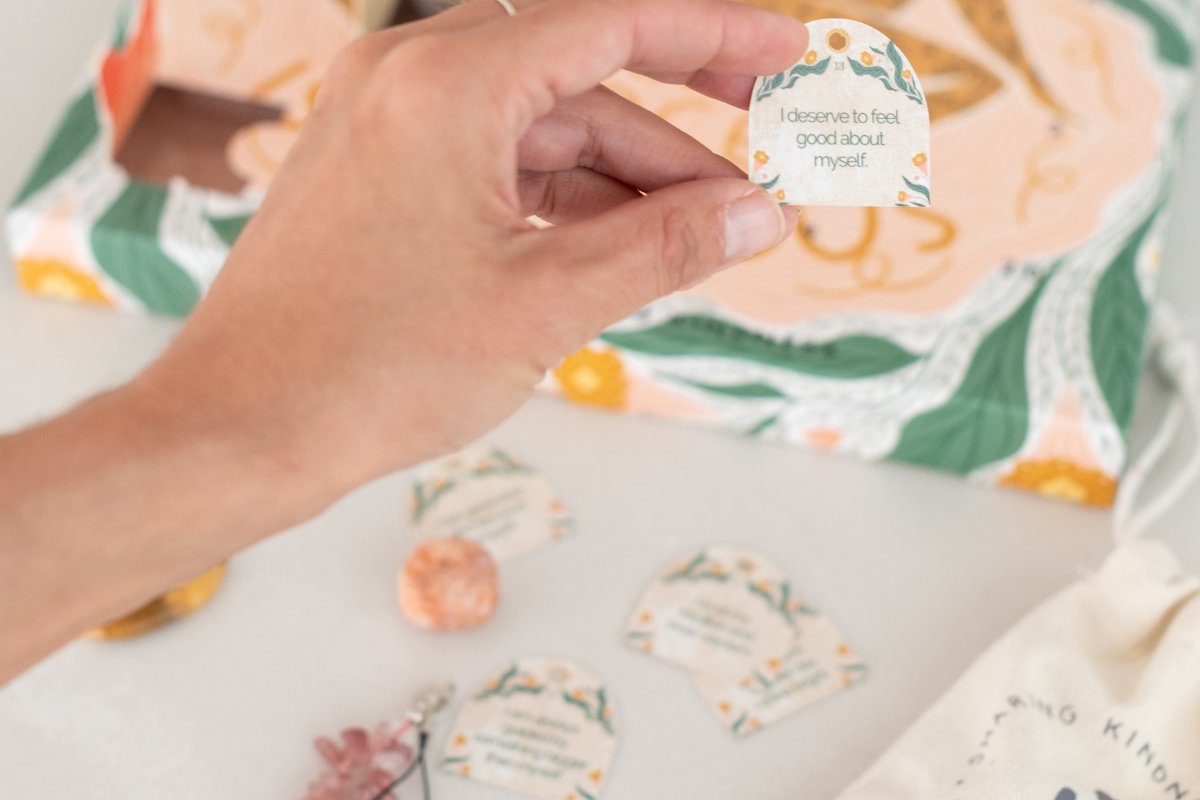
Many families start with a simple card game or a printable challenge, then move between screens and paper as the child's interest changes. That mix matters more than any single product. A game is only useful when it leads to a conversation or an action away from the device.
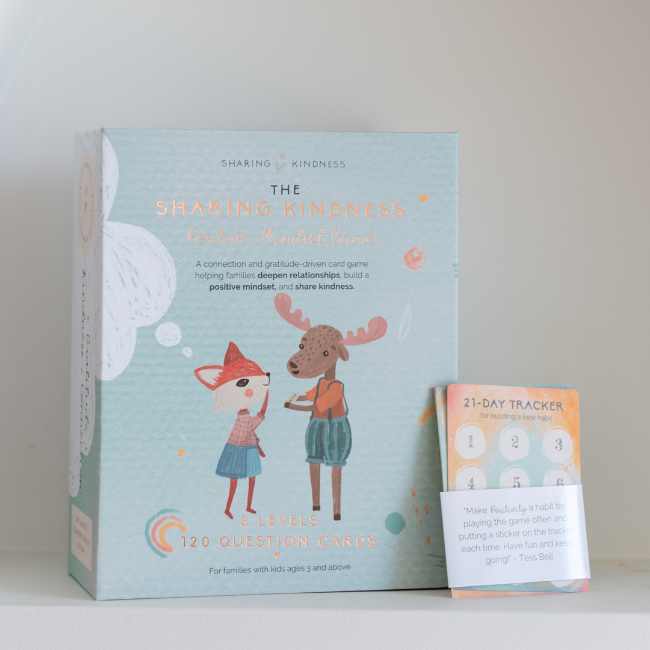
At Sharing Kindness, we design our activities around that idea. Our Positive Mindset Game uses prompt cards about gratitude, fears and feelings, with action cards hidden among them, to help children share stories with the people around them.
Kindness Games Online for Kids: Picking the Right Fit by Age
The right game depends on the child's age, reading level and how they process instructions. A useful split is by developmental stage rather than by school year, because two children in the same class can be two years apart in what they can handle.
For ages three to five, look for picture-only prompts, one-step actions and no reading. Games that ask a child to point at a feeling face, match a kind act to a picture or choose between two simple responses work well. Sessions should run five to ten minutes, and repetition is a feature rather than a flaw at this age. A printable set of kindness cards with photos or simple drawings often beats a screen-based game for this group, because a child can hold the card and act it out.
For ages six to eight, short reading is fine if an adult is nearby. Look for games that ask "what would you do?" and offer more than one reasonable answer. Role play starts to work here, especially when the adult takes the harder role. Ten to fifteen minutes is a sensible session length.
For ages nine to twelve, open questions, scenario cards and reflection prompts hold attention. Children in this band often prefer to discuss a dilemma than to play a scoring game, so a pass-it-on card set or a family discussion game can work better than an app. Fifteen to twenty minutes suits most families.
Accessibility is where most kindness game lists fall short. If your child is neurodivergent, has a physical disability or finds busy interfaces overwhelming, check four things before you start. First, can the game be played without timed pressure? Timers are the most common reason a child disengages. Second, is there a read-aloud option or can an adult read the prompt without breaking the flow? Third, can the child respond by speaking, pointing or drawing rather than typing? Fourth, does the interface allow you to reduce animation, sound or colour intensity? A game that fails two or more of these is likely to cause friction rather than connection.
A practical way to choose is to ask three questions. Can the child play it with little reading help? Does it invite talk rather than only tapping or scoring? Can it be repeated across several weeks without becoming boring?
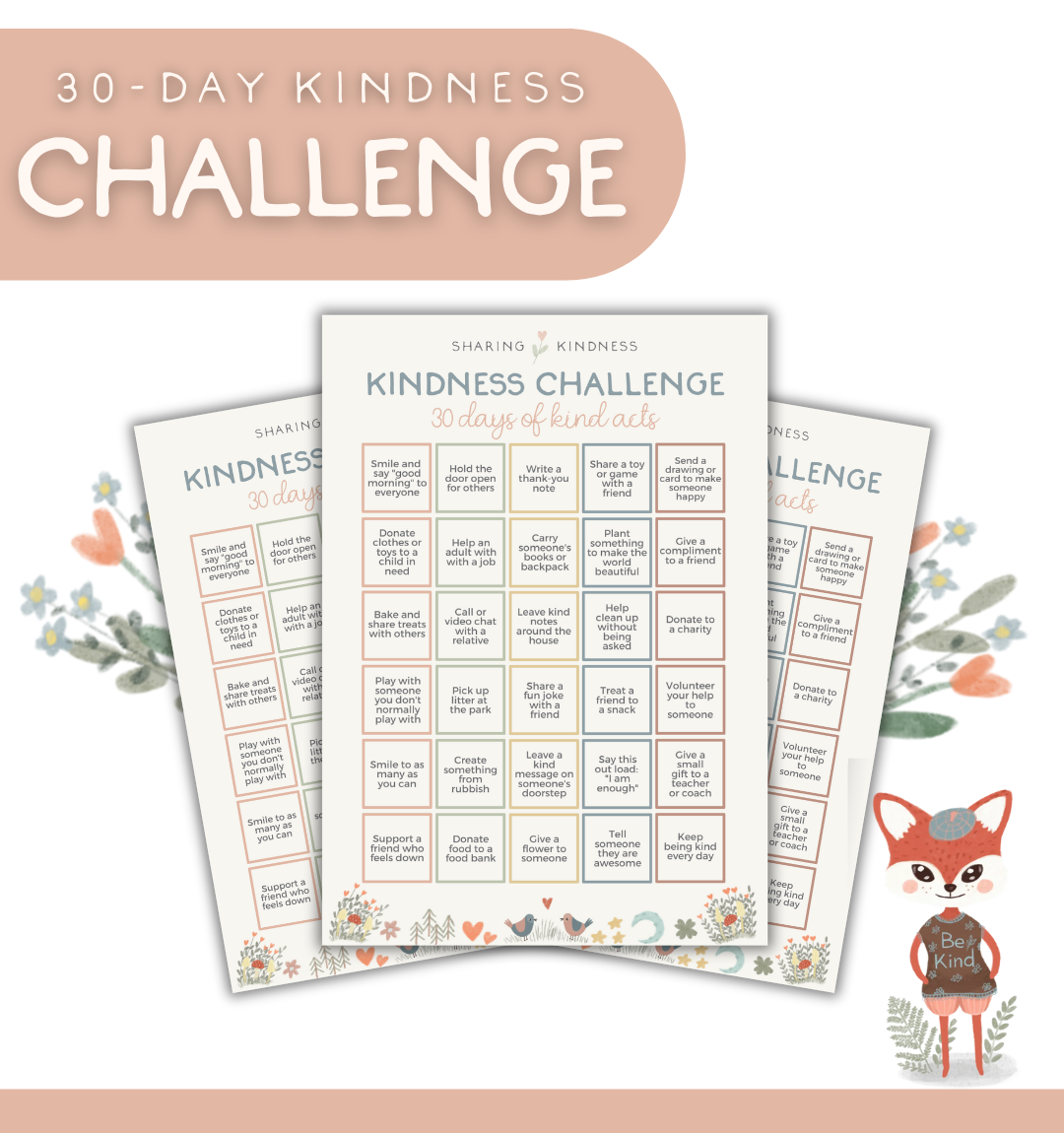
Our Positive Mindset Game contains 120 question cards focused on sharing stories and spreading positivity, so it suits children who enjoy sharing stories. For a lighter starting point, families can try the 30-Day Kindness Challenge printable, a digital challenge of simple acts of kindness for each day.
Kindness Games Online Free: What to Look For
Free kindness games can be useful, but check what they actually ask of your child. Some are little more than timed clicks with a cheerful theme. Look for activities that prompt a real action, a reflection or a conversation, not just points for pressing buttons.
Check the privacy settings before your child plays. Look for clear information on whether accounts are needed, whether chat features exist and what data is collected. If a game asks for personal details or links to open chat with strangers, it is worth skipping.
Printable options often offer the best value. The Kindness Bucket List Kit is a digital product that can be printed, framed or laminated for use in the home, at school or in a classroom.
Empathy Games for Children That Build Real Connection
Empathy grows when children practise noticing how other people feel. Games that ask "how do you think they felt?" or "what would you do next?" give children that practice in a safe way. Role play works especially well for this, because a child can try out a response before using it with a friend.
A common mistake is to treat empathy games as a one-off lesson. Children learn more when the game becomes a regular habit, with the same question asked at dinner or bedtime. Keep sessions short, around ten minutes, and let the child choose the prompt when possible.
Our Kindness Crystals pass-it-on set takes a similar idea offline. Each set includes three raw crystal stones and cards to travel with them, so a stone can be given to someone else.
Online Safety Games for Students and How to Play Safely
Families should treat online games like any other online space. Before play, check the age rating, the chat features and whether the game requires sign-in.

Good online safety habits can also be taught through the game itself. Ask children what they would do if someone asked for their name, school or location. Practising that answer through role play makes it easier to remember under pressure.
Where possible, combine online and offline play. A printed challenge or a card game gives children a break from the screen and keeps the focus on the people in the room.
Helping Parents Mediate Screen Time Without the Battles
Most guides stop at "set a timer and stick to it". The part that matters more is what you do in the ten minutes after the game ends, because that is where a kindness game either becomes a talking point or fades into background noise. Parental mediation research usually splits into three styles: restrictive (rules and limits), co-use (playing together) and active mediation (talking about what happened). For kindness games, active mediation does most of the work, and it costs nothing.
A simple structure that works for children aged four to eleven is a three-question debrief. Ask what the character felt, what your child would have done in that situation, and who in their own life reminds them of that character. Keep it under five minutes. Children disengage when the debrief feels like a test, so let them answer in one word if they want to. The aim is a habit of noticing, not a perfect answer.
For co-use, sit close enough to see the screen but avoid narrating every tap. Let the child lead, then ask one open question at a natural pause. A common pattern is that children volunteer far more about fairness and friendship during a game than they do at the dinner table, so treat the game as a doorway rather than a lesson.
Restrictive mediation still has a place. Agree the finish point before play begins, name the device ("after this round, the tablet goes on the shelf"), and use a visual timer rather than a verbal warning. Children accept limits more easily when the limit is visible and predictable. If a child argues, redirect to the offline version of the same activity rather than extending the argument about the screen.
Watch out: if the debrief turns into a lecture, children learn to give the answer you want rather than the one they mean, and the conversation stops being useful.
For children who find open questions hard, offer two choices instead ("did the character feel left out or worried?"). This keeps the reflection going without demanding a long answer, and it works well for children who are shy or still building vocabulary.
The table below sums up the three mediation styles the article describes and when each one suits a child.
| Style | What it involves | Best for |
|---|---|---|
| Restrictive | Rules, agreed finish point, visual timer | Children who accept predictable limits |
| Co-use | Playing together, one open question at a pause | Children who share more during play |
| Active mediation | Three-question debrief under five minutes | Building a habit of noticing feelings |
Moving From Screen to Real Life: Your Next Kindness Step
Kindness games are most useful when they lead to something children do outside the screen. After playing, pick one small action for the week, such as writing a thank-you note, helping a neighbour or sharing a toy. Keep the step specific so the child can see what success looks like.
Track progress on paper. A simple chart on the fridge, where each completed act gets a sticker, gives children a visible record and a sense of achievement. You can use the Positive Mindset Game tracker or print the 30-Day Kindness Challenge for the same purpose.
Sharing Kindness has built these tools for families who want kindness to feel ordinary rather than forced. Start with one game this week, talk about it afterwards, and choose one real-world kindness step together.
Frequently Asked Questions
What are some online games that teach kindness?
Look for games built around sharing stories, taking turns and noticing how other people feel. Card-style prompts work well online because they open a conversation rather than rewarding speed. Positive Mindset Game from Sharing Kindness is one example: it uses prompt cards about gratitude, fears and feelings, with action cards hidden among them, so children practise kindness and honest sharing together. Pair any digital game with a simple follow-up question at the end of each session, such as what someone did that made the day better, to turn play into real practice.
Are there free online kindness games for kids?
Yes, but free options vary in quality, so check what a free game actually asks children to do. Printable activities are often the easiest to start with. The 30-Day Kindness Challenge and the Kindness Bucket List Kit from Sharing Kindness are digital downloads at a low cost, and you can print them, tick off acts together and use them offline as well as online. Before you download or sign up for anything, read the privacy notes and avoid games that ask children for personal details or push them to share photos.
How can online games help children practise empathy?
Empathy grows when children are asked to name feelings and imagine another person's point of view. Games that use open prompts, such as how a character might feel after a difficult day, give children a low-pressure way to practise this. Keep the adult role small: ask one or two questions, listen to the answer and avoid correcting it. Short, regular sessions of ten to fifteen minutes usually work better than one long session, and they are easier to repeat across a week.
Which online games teach children about online safety and kindness?
Games that combine kindness with online safety usually focus on respectful behaviour, such as not sharing personal details, being kind in comments and knowing when to tell a trusted adult. Look for games that give children clear scenarios to talk through rather than only rewards for points. Use the game as a starting point: after playing, ask your child what they would do if someone online was unkind to them, and agree on who they would talk to. This turns a game into a habit that lasts beyond the screen.
