


Last Updated: 8 November 2026
Quick Summary
Choose confidence-building gifts by starting with your teen's own habits, sensory needs and interests rather than their diagnosis. Offer two or three suitable options within your budget and let them pick, because teenagers who choose their own gifts take ownership of them and actually use them.
- Ask what your teen already reaches for, what drains them and what they want to be good at.
- For ADHD, match tools to existing habits, such as a simple one-page-per-day planner.
- For autistic teens, check texture, sound, visual load, smell and taste before buying anything.
- Making a confidence box together gives your teen ownership from the first minute.
- The test for any gift is simple: can they use it without asking you?
Table of Contents
- Why the Right Gift Builds More Than a Smile
- Start With the Teen, Not the Diagnosis
- Gifts for Teenagers with ADHD: Movement, Focus and Interest-Led Choices
- Choosing a Gift for an Autistic Teenager: Sensory Profile Comes First
- Confidence-Building Gifts for Neurodivergent Teens DIY: Make It Together
- Independence-Building Gifts for Teenagers: Small Tools, Big Ownership
- How to Pick a Gift with Your Teen, Not For Them
- Build a Confidence Box Together This Week
- Frequently Asked Questions
Why the Right Gift Builds More Than a Smile
Confidence-building gifts for neurodivergent teens work differently from ordinary presents. They hand a teenager a tool they can use again without you, whether that is a fidget ring, a journal, a set of affirmation cards or a craft kit.
That is the heart of it. A present that sits on a shelf builds nothing. A present that gets picked up on a hard Tuesday afternoon, without a parent suggesting it, builds self-esteem quietly and steadily.
If you want the longer version of how gifts support teenage confidence, our guide to confidence-building gifts for anxious teenagers goes deeper.
Below, we break down how to choose well for ADHD, autism and everything in between, plus how to build a confidence box together this week. But first, here is what most gift guides get wrong: they group teenagers by diagnosis and stop there.
Start With the Teen, Not the Diagnosis
A diagnosis tells you very little about what a specific teenager will actually use. Two autistic teenagers can have opposite sensory profiles. One craves deep pressure and movement; the other needs quiet and low stimulation. The same gift can delight one and overwhelm the other.
So start with three questions instead:
- What does your teen already reach for? Fidget spinners, sketchbooks, headphones, building kits. The answer is your best clue.
- What drains them? Bright lights, loud textures, scratchy fabrics, surprises. Avoid gifts that add to the load.
- What do they want to be good at? A teen who wants to draw needs art supplies, not another sensory toy.
Neurodivergent teens are individuals first. A gift that respects their specific sensory needs and special interests will always beat a gift chosen from a diagnostic checklist.
Three questions do more work than any diagnostic checklist when you are choosing a gift.
| Question | What to look for | Gift example |
|---|---|---|
| What does your teen already reach for? | Fidget spinners, sketchbooks, headphones, building kits | Match the gift to that habit |
| What drains them? | Bright lights, loud textures, scratchy fabrics, surprises | Avoid gifts that add to the load |
| What do they want to be good at? | A skill or interest they want to develop | Art supplies for a teen who wants to draw |
Gifts for Teenagers with ADHD: Movement, Focus and Interest-Led Choices
For teenagers with ADHD, the best gifts channel restlessness into something absorbing and give them a tool they can reach for without asking. Movement helps focus, so fidget toys, tactile tools and hands-on activities often work better than passive presents.
Practical picks, with the trade-offs that matter:
- Discreet fidgets such as fidget rings, smooth tactile tools or a putty that fits in a pocket.
- Building kits and STEM kits that reward sustained attention with a visible result. Choose a kit with a clear finish line and a manageable number of pieces. A 500-piece set bought for a teen who has never finished a 100-piece set usually ends up half-built.
- Art supplies and craft kits for creative accomplishment without a deadline. Open-ended supplies such as good pencils, a plain sketchbook or a small pottery kit tend to last longer than single-project kits.
- Planners and journals with simple layouts. A one-page-per-day planner with a single to-do column works better than a colour-coded system with seven sections. Start simple and add complexity only if your teen asks for it.
- Noise-reducing headphones for blocking out distracting sound during homework or travel. Check the charging time and whether they need a cable, because a flat battery at the wrong moment undoes the benefit.
Interest-led choices matter most here. If affirmation cards appeal, our article on whether affirmation cards really help anxious teens covers what the evidence says and how to introduce them without the eye roll.
If you are buying for a teenager with ADHD, offer two or three options within your budget and let them pick. The act of choosing is part of the gift.
Watch out: buying a complicated planner system for a teen who has never used one usually ends with an unused planner and a dent in their confidence.
Choosing a Gift for an Autistic Teenager: Sensory Profile Comes First
Sensory profile comes before everything else when choosing a gift for an autistic teenager. A gift that feels wrong against the skin or sounds wrong in the room will be rejected no matter how thoughtful the intention.
Ask yourself:
- Texture: soft, smooth, matte. Avoid scratchy, sticky or unpredictable surfaces.
- Sound: quiet clicking is fine for some teens, unbearable for others.
- Visual load: calm colours and simple designs over busy patterns.
- Smell and taste: skip strongly scented items unless you know they are welcome.
Calming aids such as a weighted blanket, noise-reducing headphones or a soft tactile object often earn their place. So do low-stimulation creative tools: a plain sketchbook, good pencils, a simple craft kit.
Once you understand the sensory needs, a calm affirmation card set can work well because it is quiet, predictable and self-paced. Our Box of Confidence affirmation cards are hand-drawn and warm, and they help build confidence and resilience.

Confidence-Building Gifts for Neurodivergent Teens DIY: Make It Together
DIY confidence-building gifts for neurodivergent teens beat bought ones in one important way: the teen helps make the thing, so it belongs to them from the first minute. That ownership is where independence starts.
Try one of these:
- Decorate a confidence box. Start with a plain box, add affirmation cards, a favourite photo, a small comfort object and a written note from you. Let your teen choose the colours and the contents. If they want it plain, keep it plain.
- Make a calm-down kit. Fill a small bag with fidget tools, headphones, a soft cloth and a card listing their own coping strategies. The card matters most because the strategies are theirs, not yours.
- Create a personal planner. Print simple pages, let them choose the layout and bind it together. A planner they designed is a planner they are more likely to open.
- Build a display for their cards. A wooden card holder lets a teen keep affirmation cards visible on a desk or shelf, on their own terms.
The making is the point. You are not crafting a present; you are handing over a tool and the confidence that comes with choosing how it looks and where it lives.
Keep the session low-pressure. Offer materials and a rough idea, then step back. Watch out: taking over the craft to make it look neater tells a teenager that their version was not good enough, which undoes the benefit.
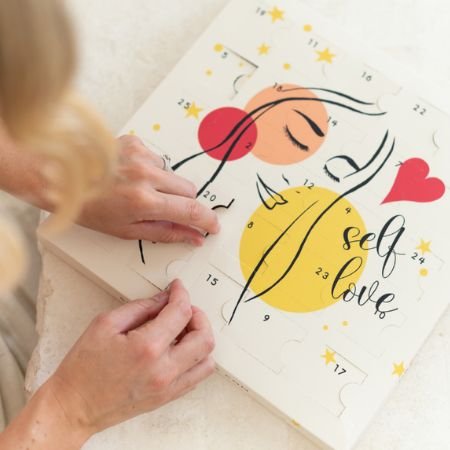
If you want to fill the box faster, our printable mindfulness products include affirmation cards, posters and kindness calendars you can print at home and add straight to the box. The point is not perfection.

Independence-Building Gifts for Teenagers: Small Tools, Big Ownership
Independence-building gifts give a teenager something to manage themselves: their space, their time, their feelings. The gift is small; the message is large.
What this looks like in practice:
- A wooden card holder so affirmation cards live on their desk, not in your drawer
- A simple alarm clock so mornings belong to them, not to you
- A journal with a lock for private processing
- A small shelf or organiser for their own belongings
- A prepaid card or budget planner for learning money decisions in low-stakes ways
A common mistake is choosing the tool you would use rather than the one your teen will use. If they hate writing, a beautiful journal is decoration. If they love music, headphones are independence.
The test is simple: can they use it without asking you? If yes, it builds self-determination. If no, it is clutter with good intentions.
How to Pick a Gift with Your Teen, Not For Them
Teen-led gift selection is the single biggest predictor of whether a present gets used. Teenagers who choose their own gifts take ownership of them. Teenagers who are handed a surprise often smile politely and never touch it again.
Here is how we would do it:
- Set a budget and a shortlist. Offer three or four options you are happy with, then let them choose.
- Shop together or build a wishlist. Browsing together removes the guesswork and keeps it age-appropriate, without talking down to them.
- Ask directly. "Which of these would you actually use?" is a better question than "What do you want?"
- Respect the answer. If they choose the plainest option on the list, that is the right gift.
- Keep it non-patronising. No babyish packaging, no "well done" framing. Present it as a tool for their space, not a reward for good behaviour.
This approach also solves the grandparent problem. If a relative wants to give something meaningful, a short wishlist built with your teen means the gift lands.
Build a Confidence Box Together This Week
You do not need a special occasion to start. A confidence box takes an afternoon and gives a teenager a place to go when things feel wobbly.
Here is a simple version to try:
- Choose a box together, plain or decorated
- Add 5 to 10 affirmation cards your teen picks themselves
- Include one comfort object: a soft item, a photo, a small stone
- Add one fidget or tactile tool
- Write one note from you, short and specific
- Agree where the box lives and that it is theirs alone
- Add a wooden card holder so the cards stay visible between visits
If you want to fill it faster, our printable mindfulness products include affirmation cards, posters and kindness calendars you can print at home and add straight to the box. The point is not perfection. The point is that your teen opens it, uses it and knows it was built with them, not at them.
Choosing well for a neurodivergent teenager takes a bit more thought than grabbing a gift card, and it is worth the effort.
Frequently Asked Questions
What are some good gift ideas for a neurodivergent teenager?
Start with the teen's interests and sensory profile rather than the label. Affirmation cards like the Box of Confidence give a concrete way to talk about feelings, while a printable growth mindset poster offers a daily visual reminder. Creative kits, journals and hands-on projects work well because they build creative accomplishment without pressure. Let the teenager help choose, and keep the presentation age-appropriate so it does not feel patronising.
What is the best gift for a teenager with ADHD?
Look for gifts that work with movement and interest rather than against them. Discreet fidgets, tactile tools and building kits give restlessness somewhere to go while the hands stay busy. Interest-led choices matter most: if they love drawing, art supplies will hold attention far longer than a generic gadget. Pair the gift with a low-pressure way to use it, such as a journal with no set number of pages to fill.
How do I choose a gift for a neurodivergent teen without guessing wrong?
Ask them, or ask a sibling or friend what they are into right now. Then check the practical side: does the texture, sound or size suit their sensory profile, and will it fit their routine? A teen-led wishlist removes most of the guesswork. If you are buying for a grandchild, run the idea past their parent first, and keep the receipt in case the sensory fit is not right.
Are sensory gifts suitable for neurodivergent teenagers?
Yes, when they match the individual's sensory needs. Some teenagers find calming vibration or tactile tools soothing, while others prefer visual stimulation or quiet creative activities. The key is the sensory profile, not the category: a fidget that helps one autistic teenager may irritate another. Offer a couple of options and let the teen decide which one earns a place in their bag.
