


Table of Contents
- Why Mindful Parenting Activities Work for Busy Families
- Mindfulness Activities for Kids That Take Under 10 Minutes
- Everyday Mindful Parenting Techniques You Can Start Tonight
- Family Gratitude Activities That Don't Feel Forced
- Christmas Kindness Activities for Kids (When Everything Gets Hectic)
- Building a Mindful Parenting Routine That Sticks
- Frequently Asked Questions
Last Updated: October 16, 2026
Why Mindful Parenting Activities Work for Busy Families
Mindful parenting is the practice of staying present with your child instead of parenting on autopilot, and it works because small moments repeated often shape how children handle big feelings. At Sharing Kindness, we believe the families who do a little often get further than the families who plan a lot and never start.
You do not need an hour of calm. You need four minutes.
That is the core argument of this piece, and it runs through every activity below. The list is deliberately short and deliberately small, because the biggest mistake parents make with mindful parenting activities for families is treating them as an event. A candlelit breathing session scheduled for Sunday evening lasts one week. A five-minute check-in at the kitchen table lasts years.
Raising Children Network on emotional development in school-age children notes that children learn to manage emotions largely by watching how the adults around them manage theirs. That is worth sitting with, because it means the activity matters less than the consistency.
Below, we walk through seven ideas you can start tonight, plus a simple routine that keeps them going when life gets loud.
Mindfulness Activities for Kids That Take Under 10 Minutes
Short mindfulness activities for kids work best when they are built into moments you already have, not added on top of them. The two below take under five minutes each and need nothing you do not already own.
The Five Senses Check-In
Ask your child to name five things they can see, four they can hear, three they can touch, two they can smell and one they can taste. That is it.
We use this one in the car, in waiting rooms, and at the exact moment a meltdown is building. It works because it moves attention out of the spiral and into the body, and because it feels like a game rather than a coping strategy. A common mistake is rushing through it to get to the point. Slow down on the last two senses; that is where the settling happens.
Belly Breathing with a Soft Toy
Have your child lie down and place a favourite soft toy on their tummy. Ask them to breathe in slowly and watch the toy rise, then breathe out and watch it fall.
Ten breaths is plenty. The toy gives them something to watch, which matters more than you would think, because children under eight find it hard to follow instructions about breathing without a visual anchor. If your child is older and finds the toy babyish, swap it for a hand on the belly instead.
Everyday Mindful Parenting Techniques You Can Start Tonight
Mindful parenting techniques are the small verbal habits that turn ordinary moments into connection, and two of them cover most situations. Neither requires a mat, an app, or a spare half hour.
Name the Feeling Before You Fix It
When your child comes to you upset, resist the urge to solve it in the first ten seconds. Say what you see instead: "That sounds really frustrating." "You seem left out."
Naming a feeling before fixing a problem tells your child that the feeling itself is allowed. It also buys you a moment to work out whether the problem actually needs solving, or just needs to be heard. Most of the time, it needs to be heard.
One Thing You Noticed Today
At dinner, or in the car on the way home, ask one question: "What is one thing you noticed today that you would not have noticed last year?"
It sounds odd the first time. It works because it asks for observation rather than achievement, and it gives you a window into what your child is paying attention to. Swap the wording around each week so it does not become a script.
Family Gratitude Activities That Don't Feel Forced
Family gratitude activities fail when they feel like homework, and they succeed when there is a physical object or a shared moment attached to them. The simplest version we know is a gratitude rock: a small stone that gets passed around the table, and whoever holds it says one thing they are grateful for before passing it on. This tactile approach to mindfulness mirrors the way simple montessori activities encourage toddlers to engage with their environment through purposeful, hands-on discovery.
Children engage with this far more readily than a gratitude journal, because the object carries the instruction. It also travels well. We have seen families keep one in the car, one on the bedside table, and one in a school bag.
If you want something with a bit more structure, a printable gratitude poster on the fridge gives everyone somewhere to add a line when they walk past. Low effort, visible, and no one has to sit down and perform gratitude on command.
For families who like a game format, our Positive Mindset Game uses question prompts and action cards to get the same conversations going without anyone having to lead them. It suits kids who would rather play than talk.

Christmas Kindness Activities for Kids (When Everything Gets Hectic)
Christmas kindness activities for kids work best when they replace something rather than add to it. December is already full, so the trick is to swap one existing ritual for a kinder version of it.
A few that fit the season without adding another event to the calendar:
- Choose one toy to donate before the new ones arrive, and let your child make the choice
- Write a card for the postie, the bin collector or a neighbour who lives alone
- Bake one extra batch and deliver it together
- Pick a charity shop drop-off and make it the outing, not a chore
- Do one anonymous good deed a week and keep it a family secret
The anonymity matters. Children find it genuinely thrilling to do something kind without being credited for it, and it teaches the difference between kindness and being seen being kind.
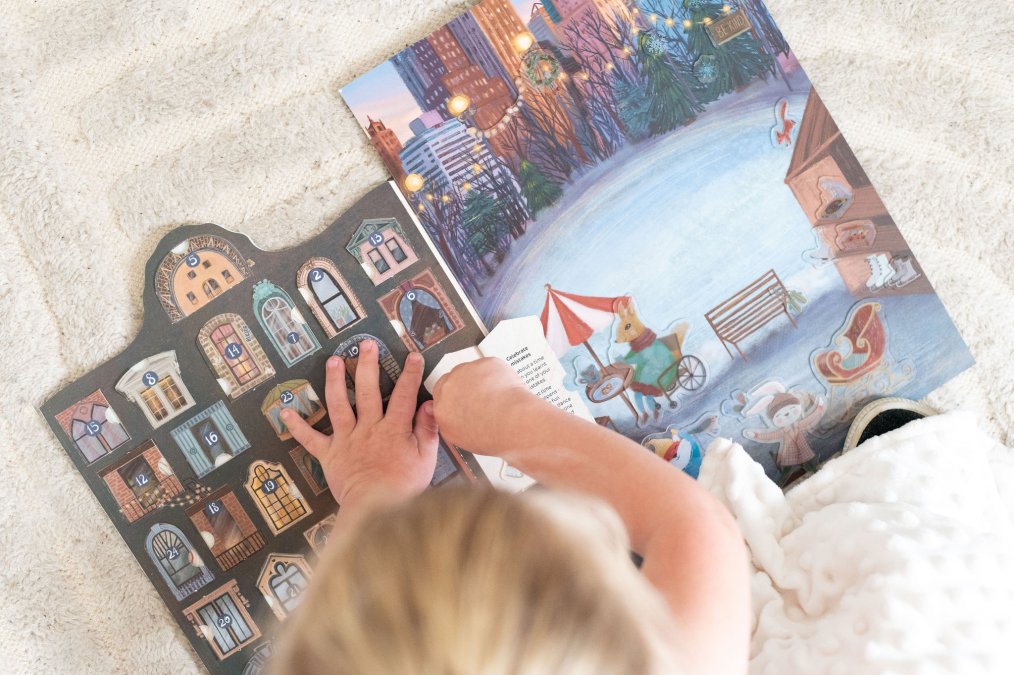
If you want the whole month planned out for you, our [30-Day Kindness Challenge [PRINTABLE]](https://sharingkindness.com/products/printable-30-day-kindness-challenge) gives a daily act of kindness, which keeps the season's meaning in view without adding to the sugar load.

Building a Mindful Parenting Routine That Sticks
A mindful parenting routine sticks when it is attached to something you already do every day, and when it is small enough to survive a bad week. Pick one anchor, not five.
| Activity | Time Needed | Best Moment | How Often |
|---|---|---|---|
| Five senses check-in | 3 minutes | In the car or at bedtime | When tension rises |
| Belly breathing with a toy | 4 minutes | After school wind-down | Most days |
| Name the feeling | 30 seconds | Any upset | Every time |
| One thing you noticed | 2 minutes | Dinner or the drive home | 3-4 times a week |
| Gratitude rock | 2 minutes | Dinner table | Daily if possible |
Start with one row. Add a second only when the first has run for a fortnight without you having to remember it.
The families who keep this going tend to do two things differently. They keep the routine in the same place each time, so it becomes a cue rather than a decision. And they let it lapse without treating the lapse as failure. Missing a week is normal. Abandoning it because you missed a week is the thing to avoid.
Headspace on short daily mindfulness practices for families makes a similar point: brief and regular beats long and occasional.
If you would like a physical cue to hang the routine on, our Box of Confidence affirmation cards are designed for exactly this. One card at breakfast, one conversation, done.

Most families start these activities with good intentions and lose them somewhere around the second busy week, especially around Christmas time when the calendar fills up and everyone is tired. The fix is not more discipline. It is fewer activities, kept smaller, anchored to moments you already have.
At Sharing Kindness, we build tools for exactly that kind of family life: a daily kindness calendar instead of a chocolate one, affirmation cards that start a conversation rather than a lecture, and a family game that gets everyone talking without anyone having to perform. Our 30-Day Kindness Challenge [PRINTABLE] and Box of Confidence are popular choices for families to start with.
Get started with Sharing Kindness and turn one small moment a day into the kind of habit your kids carry with them.
Frequently Asked Questions
What are some mindful activities families can do together?
Start with something short and repeatable. A five senses check-in at dinner, where each person names one thing they can hear, see, or taste, takes two minutes. Gratitude rounds, where everyone shares one good thing from their day, work well for kids aged four and up. A family game with question prompts, like the Sharing Kindness Positive Mindset Game, turns the same idea into something kids ask to play rather than something you have to schedule.
How long should a mindfulness activity for children last?
Shorter than most parents expect. For kids aged four to seven, two to five minutes is plenty. For eight to twelve year olds, five to ten minutes works well. The goal is consistency, not duration. A two minute breathing exercise done most evenings builds more skill than a twenty minute session attempted once a fortnight. Stop while your child is still engaged, not after they have lost interest.
Can kindness activities help children develop empathy?
They give children a repeated chance to notice how someone else feels and act on it, which is how empathy gets practiced. Simple acts like writing a card for a neighbour, sharing a compliment, or leaving a small kindness crystal for a stranger to find all prompt a child to think about another person's experience. The repetition matters more than the size of the act.
How do you make family time more mindful at Christmas?
Christmas kindness activities for kids work best when they are small and daily rather than big and occasional. A kindness advent calendar with one simple act per day keeps the focus on giving rather than receiving. A gratitude round at Christmas dinner, where each person names one thing they appreciated about the year, takes five minutes and often becomes the part everyone remembers.
How can I add mindfulness to our family's daily routine?
Attach it to something you already do. Mealtimes, the school pick-up, and bedtime are the easiest anchors because they happen every day without fail. Pick one and add a single question or a minute of breathing. If you miss a day, pick it up the next day rather than starting over. Kids copy what they see repeated, not what is explained once.